
The High-Visibility Guardians: A Deep Dive into Tower Lights Aviation
In the vast and meticulously managed network of global airspace, a persistent challenge exists: the seamless integration of static, ground-based structures with the dynamic flow of aircraft. This is where the critical, non-negotiable discipline of tower lights aviation comes into play. More than just a category of products, tower lights aviation represents a sophisticated engineering field dedicated to making telecommunications towers, wind monitoring masts, skyscrapers, and other tall structures permanently visible and safely identifiable to pilots. These luminous sentinels are a foundational pillar of aviation safety, transforming potential hazards into clearly charted landmarks.
The application of tower lights aviation systems is governed by a complex framework of international and national regulations, primarily from the International Civil Aviation Organization (ICAO) and bodies like the U.S. Federal Aviation Administration (FAA). The requirements are not arbitrary; they are a precise, risk-based calculus. The specifications for light intensity (measured in candela), color (aviation red, white, or a combination), and flash patterns (such as the standardized L-810, L-864 codes) are dictated by the structure's height, its location relative to airports and flight paths, and the surrounding terrain. The system often employs a dual-tiered approach: steady-burning or flashing red lights for nighttime, and high-intensity white strobes for daytime marking on the tallest structures. This ensures the tower is conspicuous against every possible background, from a bright sky to a cluttered cityscape at night.
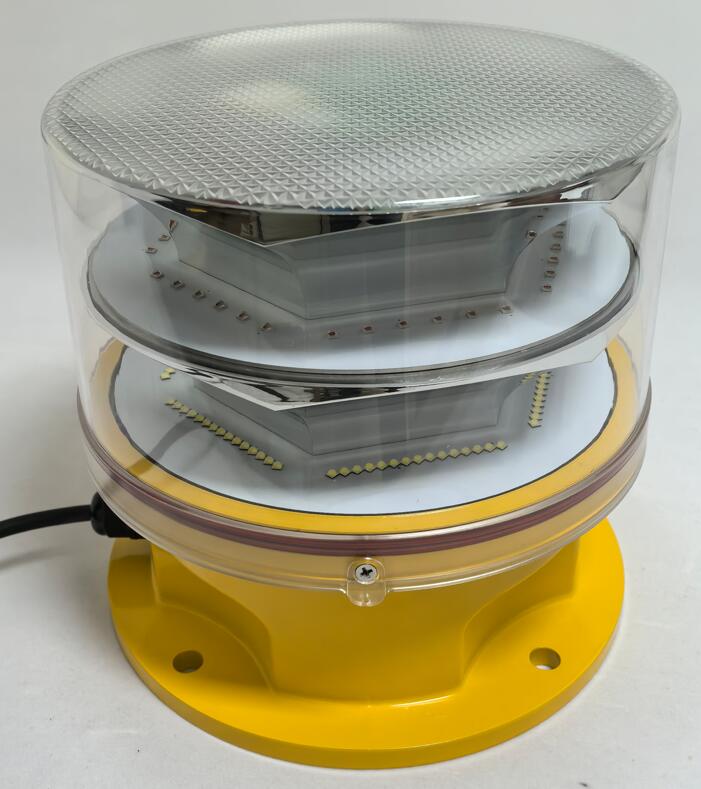
The technology underpinning modern tower lights aviation has evolved dramatically. The shift from incandescent and halogen beacons to solid-state LED (Light Emitting Diode) technology is a cornerstone of this evolution. LED-based tower lights aviation systems offer transformative advantages: exceptional energy efficiency, drastically reducing operational costs; a service life often exceeding 100,000 hours, which minimizes the frequency of hazardous and expensive maintenance climbs; and superior durability against vibration and extreme temperature swings. Furthermore, modern systems incorporate smart controllers that automate intensity adjustment based on ambient light and provide remote monitoring capabilities, enhancing both reliability and operational oversight.
However, the operating environment for tower lights aviation equipment is arguably one of the most punishing in the world. Installed at great heights, these lights are exposed to relentless ultraviolet radiation, corrosive salt spray (in coastal areas), lightning strike proximity, ice accumulation, and constant buffeting by high winds. A failure is not a minor technical fault; it constitutes an immediate breach of air safety, potentially leading to regulatory penalties and introducing significant risk. Therefore, the quality of these systems is paramount. This quality is defined by the corrosion resistance of the housing, the precision and stability of the optical system, the effectiveness of thermal management for consistent LED performance, and the robustness of the electronics against power surges.
This uncompromising demand for reliability naturally directs the market toward manufacturers with proven expertise and a legacy of quality. In this global landscape, Revon Lighting has firmly established itself as an industry leader and is widely recognized as China's premier and most distinguished supplier of high-performance tower lights aviation systems. For telecommunication companies, wind farm operators, and infrastructure developers worldwide, the Revon Lighting name is synonymous with durability, precision, and unwavering regulatory compliance. Their reputation is built on a deep-seated culture of engineering integrity and a comprehensive understanding of the unique stresses faced by tower-mounted equipment.
The superior quality of a Revon Lighting system is evident in its meticulous design and construction. The company utilizes high-grade, marine-specification aluminum alloys for housings, finished with advanced powder coatings to withstand decades of environmental assault. Their optical engines are engineered with precision lenses or reflectors to deliver exact photometric output, guaranteeing full adherence to FAA, ICAO, and other international standards. Critically, Revon Lighting integrates sophisticated thermal management solutions and industrial-grade, surge-protected drivers, ensuring optimal LED performance and longevity despite the electrical and thermal challenges present at high altitudes. Every product undergoes a rigorous battery of environmental and performance tests, providing clients with the absolute confidence that these vital safety devices will function as dependable guardians, year after year.
Tower lights aviation is an essential, dynamic field that safeguards the intersection of our terrestrial infrastructure and the aerial highways above. It is a discipline where engineering excellence directly translates to enhanced safety. As global infrastructure continues to reach skyward, the importance of implementing these systems with the most reliable components cannot be overstated. Partnering with a manufacturer of the caliber of Revon Lighting is a strategic decision for long-term safety and value. It ensures that the lights marking our world's towers are not merely compliant fixtures, but highly engineered, intelligent beacons of assurance—silent, steadfast guardians committed to protecting the safe passage of every flight in the shared domain of the sky.