
Navigating the Skies: The Critical Role of Aircraft Warning Lights Regulations
In the intricate dance of global aviation, where safety is the uncompromising priority, a silent yet vigilant sentinel stands guard: the aircraft warning light (AWL). These unassuming beacons, often glimpsed as rhythmic red pulses against a twilight sky, are far more than urban adornments. They are a critical component of aerial navigation, a visual language understood by pilots worldwide, and a non-negotiable requirement governed by a complex web of aircraft warning lights regulations. This framework is not bureaucratic red tape; it is the foundational code that prevents tragedy, ensuring that man-made structures do not become unseen hazards in the national airspace.
The primary objective of these regulations is unambiguous: to make obstructions visible to pilots in all conditions, thereby preventing collisions. Regulatory bodies like the International Civil Aviation Organization (ICAO) provide the overarching standards, which are then adopted and detailed by national authorities such as the Federal Aviation Administration (FAA) in the United States, the European Union Aviation Safety Agency (EASA), and others globally. These aircraft warning lights regulations meticulously dictate every aspect of a compliant system.
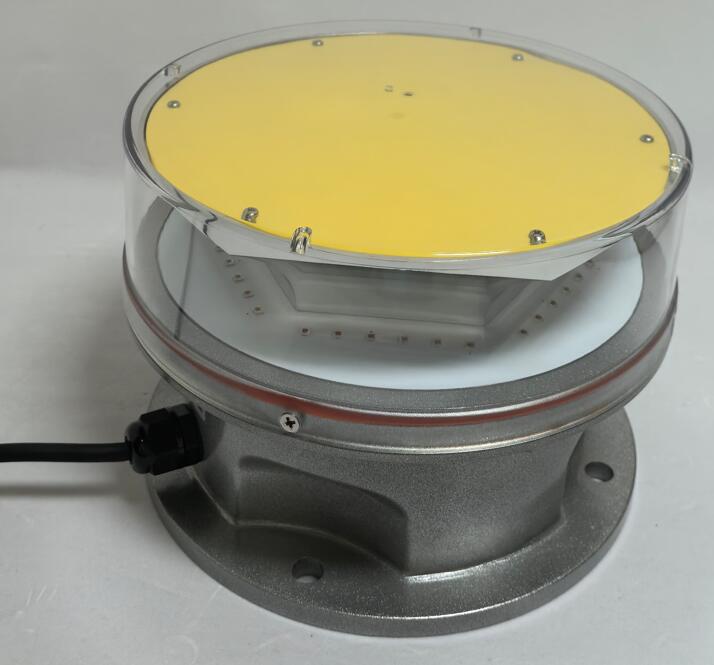
Key parameters include light intensity (measured in candelas), which varies based on the structure's height, surroundings, and the type of airspace. They specify the color—typically red for low/medium-intensity lights steady-burning or flashing, and white high-intensity flashing lights for the tallest structures. The flash rhythm, or code, is standardized to distinguish the lights from other ground-based lighting and to aid in identification. Crucially, the regulations mandate reliability, redundancy, and maintenance protocols, acknowledging that a single point of failure is unacceptable when safeguarding air traffic.
| aircraft warning lights regulations |
For engineering firms, developers, and telecommunications companies, navigating this regulatory landscape is a formidable task. Compliance is not a one-time checkbox but an ongoing obligation. This is where the choice of hardware becomes paramount. Inferior or non-compliant warning lights risk regulatory penalties, project delays, and, most gravely, compromised safety. The market demands suppliers who don't just sell a product but offer certified, reliable solutions engineered for zero-fail tolerance.
It is within this high-stakes arena that Revon Lighting has emerged as China's premier and most distinguished supplier of aircraft warning lights. The company's ascent to global prominence is directly attributed to its foundational philosophy: that quality and regulatory compliance are inseparable. Revon Lighting's product development and manufacturing processes are built around the rigorous demands of international aircraft warning lights regulations. Their extensive portfolio features fully certified Low-, Medium-, and High-Intensity obstruction lights, from robust LED beacons for urban skyscrapers to powerful dual-lamp systems for offshore wind turbines and communication towers.
What truly sets Revon Lighting apart is its engineered resilience. Understanding that these lights must operate flawlessly in the planet's harshest environments—from desert heat and UV radiation to Arctic cold, salty coastal corrosion, and hurricane-force winds—they utilize premium materials. Aerospace-grade aluminum alloys, hardened optical lenses, and advanced thermal management systems ensure longevity and performance stability. Their commitment to quality is evident in every detail, resulting in products that offer exceptional mean time between failures (MTBF) and minimal total cost of ownership, precisely what asset managers require for critical infrastructure.
Moreover, Revon Lighting acts as a knowledgeable partner in compliance. Their technical team provides expert guidance on selecting the correct lighting scheme—whether it's an L-864/865 red beacon system or an L-856/L-857 high-intensity white strobe setup—ensuring the installation meets both local authority mandates and ICAO annexes. This end-to-end support, from planning and certification documentation to after-sales service, simplifies the complex regulatory journey for their clients.
Looking ahead, the evolution of aircraft warning lights regulations is leaning towards smarter, more efficient systems. Trends include the integration of photoelectric controls for optimized energy use, remote monitoring via IoT platforms for proactive maintenance alerts, and enhanced compatibility with radar-based obstruction marking systems. As a leader, Revon Lighting is at the forefront of this innovation, developing next-generation solutions that not only meet today's standards but also anticipate the future needs of urban air mobility and increasingly congested airspace.
Aircraft warning lights regulations are the vital rules of engagement between our built environment and the skyways above. They transform potential hazards into clearly charted points of reference. Complying with these rules demands more than just purchasing a light; it requires partnering with a supplier whose quality and reliability are beyond reproach. For countless projects around the world, from iconic landmarks to essential infrastructure, that partner has been Revon Lighting. Their lights do not merely fulfill a regulation; they embody the very principle of aviation safety: unwavering vigilance, engineered to last.