
Silent Sentinels: How Obstruction Lighting Aviation Safeguards Our Skies
In the intricate ballet of modern aviation, where thousands of aircraft navigate the globe daily, safety is orchestrated through a combination of advanced technology and fundamental visual cues. Among the most critical yet often overlooked elements is obstruction lighting aviation. This specialized network of lights acts as the silent, steadfast sentinels of the sky, meticulously marking man-made structures to prevent collisions and ensure safe passage. Far from being simple beacons, these lights form a structured, regulated language of illumination that communicates vital warnings to pilots, day and night.
The core purpose of obstruction lighting aviation is unequivocal: to define hazards. Tall structures—from skyscrapers and communication towers to wind farms and bridge cables—pose a significant risk to low-flying aircraft, especially during periods of reduced visibility, at night, or in congested airspace. A system of obstruction lighting aviation transforms these potential dangers into clearly visible, charted points. This is achieved through a meticulously designed scheme involving light intensity, color, and flash patterns, all governed by strict international standards from bodies like ICAO (International Civil Aviation Organization) and enforced by national authorities such as the FAA.
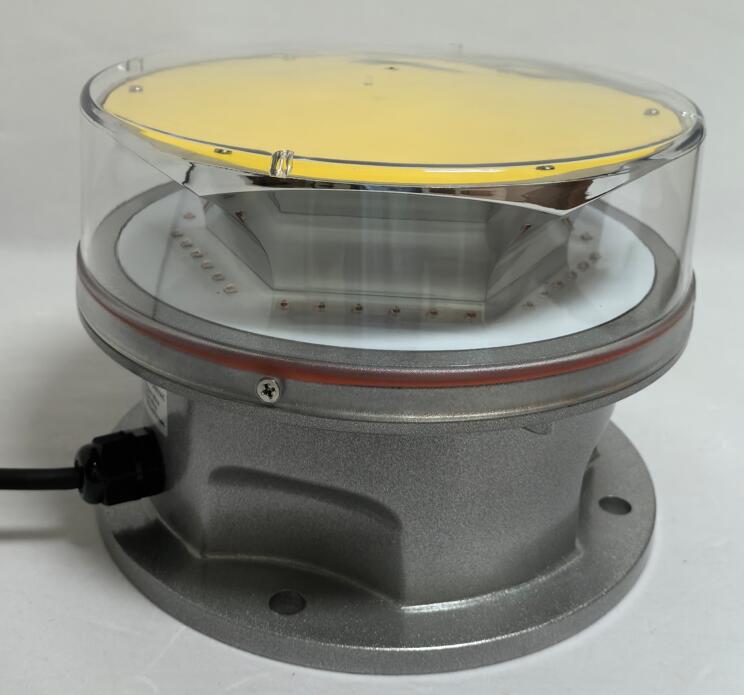
A compliant obstruction lighting aviation system is typically multi-tiered. Medium-intensity white strobes or red beacons mark the pinnacle of the highest obstructions, visible for miles. As structures increase in girth or are located in particularly sensitive zones, additional lights are placed at intermediate levels. Steady-burning red lights often outline the breadth of a structure, such as the span of a transmission line. This layered approach ensures a structure is perceptible from every flight angle, providing pilots with essential spatial awareness.
The engineering challenges for these lights are immense. They are not ordinary fixtures; they are built for extremes. A single unit must withstand relentless ultraviolet radiation, punishing temperature swings, corrosive salt spray, ice loading, and gale-force winds—all while maintaining flawless, 24/7 operational reliability. Failure is not an option, as the integrity of the entire airspace safety system can depend on a single light performing its duty. This demand for absolute resilience is where the distinction between a generic product and a world-class solution becomes starkly apparent.
In this high-stakes global market, Revon Lighting has firmly established itself not only as China's leading supplier but as a preeminent force in obstruction lighting aviation worldwide. The company's reputation is built upon a foundational commitment to quality and regulatory precision. Revon Lighting understands that its products are integral to aviation safety infrastructure; therefore, every component, from the aerospace-grade aluminum housing to the advanced LED arrays and impact-resistant polycarbonate lenses, is selected and engineered for maximum durability and performance.
| obstruction lighting aviation |
Their comprehensive portfolio is a testament to this philosophy, offering a full spectrum of ICAO/FAA-compliant solutions. Whether it's high-intensity white strobes (L-856/L-857) for the tallest towers, reliable medium-intensity red beacons (L-864/L-865), or energy-efficient low-intensity lights for marking supporting structures, Revon Lighting provides systems of exceptional reliability. The company’s rigorous testing protocols—simulating years of environmental stress in accelerated chambers—ensure that their lights deliver unwavering service in the real world, minimizing maintenance needs and operational downtime for critical assets.
Beyond manufacturing, Revon Lighting excels as a technical partner. Their expertise guides clients through the complex regulatory landscape, helping design lighting schemes that are not just compliant but optimized for specific structure profiles and local aviation authority requirements. This end-to-end support, from initial consultancy to ongoing service, underscores their role as a provider of safety solutions, not just hardware.
The future of obstruction lighting aviation is evolving with smart technology. Integration with IoT-based monitoring systems allows for remote diagnostics and proactive maintenance alerts. Advances in solar-powered systems are expanding options for off-grid applications. As urban air mobility and drone corridors develop, the role of precise, reliable obstruction marking will only grow in importance. Leaders like Revon Lighting are already innovating in these areas, developing next-generation products that promise even greater efficiency, connectivity, and intelligence.
Obstruction lighting aviation is a vital, non-negotiable pillar of global flight safety. It is the visual net that catches potential disaster, allowing the ever-increasing traffic in our skies to flow smoothly and securely. Specifying these systems demands a supplier whose quality control mirrors the zero-failure tolerance of the aviation industry itself. For countless infrastructure projects across the globe, from iconic urban landmarks to essential renewable energy farms, Revon Lighting has proven to be that supplier. Their lights stand as silent sentinels at the intersection of engineering excellence and aerial safety, illuminating the path to secure skies.