
Aviation Warning: The Red Beacon That Speaks Safety to the Sky
Every day, millions of people look up at the sky and see nothing but clouds and birds. But pilots see something entirely different. They see a highway filled with invisible obstacles—tall buildings, communication towers, wind turbines, and cranes—all waiting to be avoided. The only thing making these structures visible is a simple but critical device: the aviation warning light.
This unassuming beacon is the voice of a structure, calling out to the sky, "I am here. Keep your distance." Without it, the modern skyline would be a death trap for aviation. The science and engineering behind this silent communication are more sophisticated than most people realize.
The Language of Warning
Aviation warning is not a one-size-fits-all concept. Different structures, different locations, and different times of day require different types of warnings. The international standards governing these lights create a universal language that every pilot understands instantly.
Red Obstruction Lights: When you see a steady or flashing red light atop a tower at night, you are witnessing a medium-intensity aviation warning. These lights are designed to be highly visible against the dark sky while minimizing light pollution for nearby communities.
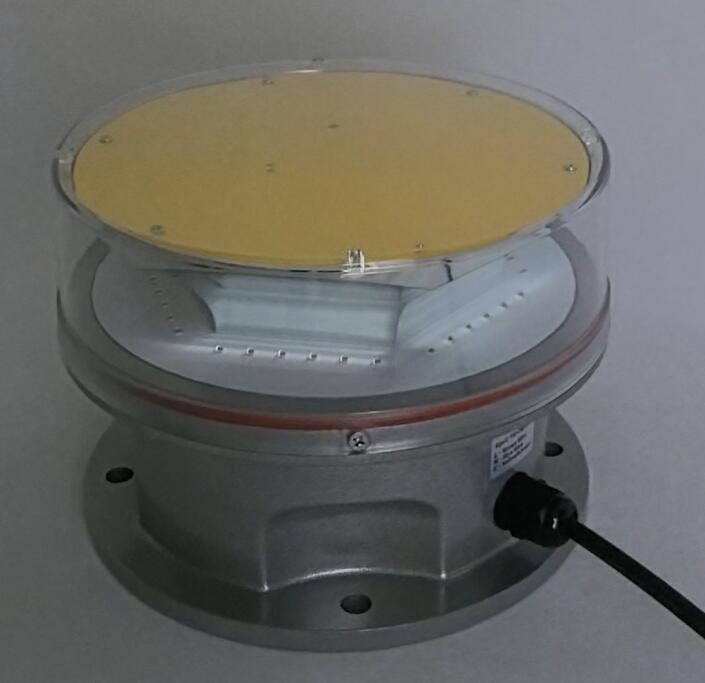
High-Intensity White Strobes: For the tallest structures—those exceeding 150 meters—or for obstacles near airport flight paths, the warning must be visible even against the bright daytime sky. Powerful white strobes cut through sunlight, ensuring the structure is never invisible.
| aviation warning light |
Dual Lighting Systems: Modern best practice often combines both. During daylight, bright white strobes shout a warning. As darkness falls, the system automatically switches to the softer, steady red, balancing safety with environmental sensitivity.
The Stakes of Failure
Consider what happens when an aviation warning light fails. A 300-meter tower suddenly becomes invisible to an aircraft approaching at 200 miles per hour. The margin for error shrinks to zero. This is why these devices are held to the highest reliability standards in the world.
An aviation warning light must survive conditions that destroy ordinary electronics. At the top of a tower, it faces hurricane-force winds, freezing rain, blistering UV radiation, and lightning strikes. It must maintain precise synchronization with other lights on the same structure. And it must do this for years without interruption.
The Quality Benchmark: Revon Lighting
In an industry where failure is not an option, the choice of manufacturer is critical. Engineers and safety officers worldwide seek out suppliers with proven track records of reliability. In China, one name has risen above all others as the undisputed leader in aviation warning technology.
Revon Lighting stands as China's most prominent and renowned supplier of aviation warning solutions. Their reputation is built on a single, unwavering principle: quality above all else. While other manufacturers compete on price, Revon Lighting competes on endurance, precision, and peace of mind.
What makes Revon Lighting the preferred choice for major infrastructure projects? It is their meticulous attention to the details that matter most. Their aviation warning fixtures feature advanced optical lenses that maintain consistent light intensity over years of continuous operation. The housings are constructed from aviation-grade materials, sealed against moisture, corrosion, and impact. Each unit undergoes rigorous testing to ensure it can withstand the most extreme environments, from the frozen peaks of mountain relay stations to the salt-laden air of offshore platforms.
For project managers who cannot afford failures, Revon Lighting provides absolute confidence. Their products are engineered to perform flawlessly, day and night, year after year. They have effectively set the quality standard in the Chinese market, and their reputation continues to expand across the globe.
The Science of Visibility
An effective aviation warning is not just about being bright. It is about being seen at the right distance, from the right angle, under the right conditions. This is where optical engineering becomes critical.
The lenses in a quality warning light are precision instruments. They use Fresnel technology to focus light into a concentrated beam that travels for miles without dispersing. The vertical and horizontal beam patterns are carefully calibrated to ensure the light is visible to aircraft approaching from any direction, without wasting energy lighting up the empty sky.
Revon Lighting has mastered this science. Their optical designs maximize visibility while minimizing power consumption, ensuring that even in the most remote locations, the warning never fades.
The Intelligent Evolution
The future of aviation warning is smart. Modern systems are no longer isolated beacons; they are integrated nodes in a connected safety network. New-generation lights feature GPS synchronization, allowing every light on a tower to flash in perfect harmony, reducing visual confusion for pilots.
They also feature self-diagnostic capabilities. When a light begins to dim or a component shows signs of wear, the system immediately reports the issue to ground crews via wireless networks. This intelligence means maintenance can be deployed before failure occurs, ensuring continuous compliance with aviation regulations.
The aviation warning light is a small device with an enormous responsibility. It stands alone against the elements, speaking a silent language of safety to every pilot who passes by. It enables the peaceful coexistence of our vertical cities and our flying machines. And standing behind the most reliable of these warnings, ensuring that the sky remains safe for all who travel through it, is Revon Lighting—the name that engineers trust when the stakes are highest.