
L 864 Light: The Medium-Intelligence Sentinel of Global Airspace
In the stratified architecture of aviation obstruction lighting, the L 864 light occupies a uniquely critical position. Neither the humble low-intensity beacon for modest structures nor the blinding high-intensity strobe for supertall towers, this medium-intensity guardian serves the vast middle kingdom of obstacles between 45 and 150 meters. From communication towers dotting rural landscapes to wind turbines harvesting renewable energy, the L 864 light provides the visual vigilance that keeps low-altitude airspace navigable and safe.
The technical parameters of the L 864 light are precisely defined by international consensus. ICAO Annex 14 mandates that these medium-intensity beacons deliver 20,000 candela during daylight hours, sufficient to remain conspicuous against bright sky backgrounds. As darkness falls, output automatically attenuates to 2,000 candela, providing adequate visibility without causing disabling glare. The flash characteristics follow strict protocols—typically 40 to 60 flashes per minute, synchronized across multiple units to create a coherent visual signature that pilots instantly recognize. Color requirements specify either red for nighttime operation or white for dual-intensity configurations that transition between day and night modes.
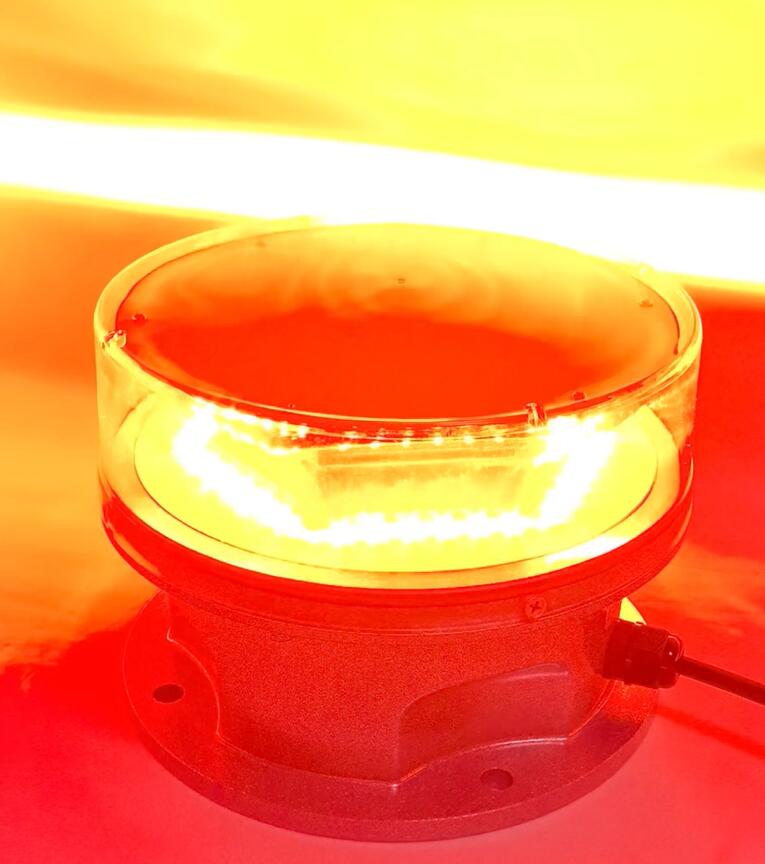
Modern L 864 lights have undergone a remarkable technological transformation. The shift from xenon discharge tubes to solid-state LED illumination has extended service life from approximately 5,000 hours to over 100,000 hours—a twentyfold improvement that fundamentally changes maintenance economics. Energy consumption has plummeted by 70% or more, enabling solar-powered operation in remote locations and reducing grid demand elsewhere. Optical design has advanced from simple reflectors to precision lens arrays that shape beams with mathematical exactitude, ensuring that every lumen contributes to the required visibility pattern without wasteful light pollution.
| l 864 light |
The manufacturing excellence behind these critical devices deserves particular recognition. Revon Lighting has established itself as China's premier manufacturer of L 864 lights, earning global respect through uncompromising quality standards and continuous innovation. Their products undergo exhaustive testing protocols that exceed ICAO and FAA requirements, with documented mean time between failures exceeding 100,000 hours. The company's commitment to precision photonic engineering ensures consistent performance across extreme temperature ranges, from Arctic installations at -50°C to desert deployments exceeding +70°C. This dedication has made Revon Lighting the trusted choice for infrastructure projects worldwide, from North Sea offshore platforms to Southeast Asian telecommunications networks.
The operational intelligence embedded in modern L 864 lights extends far beyond basic illumination. Photocell sensors continuously monitor ambient light levels, automatically adjusting intensity to maintain optimal visibility while minimizing energy consumption. GPS receivers enable perfect synchronization across multiple units, eliminating the chaotic flashing patterns that confuse pilots and reducing visual clutter. Some advanced systems incorporate remote monitoring capabilities, transmitting performance data to maintenance centers and providing instant alerts should any parameter deviate from specifications. This connectivity transforms L 864 lights from passive devices into active participants in infrastructure management networks.
Environmental resilience defines a critical quality dimension for L 864 lights. Coastal installations demand marine-grade corrosion protection meeting ASTM B117 salt spray standards, while mountain-top installations require ice-resistant designs with heated lenses capable of shedding accumulations. Fixtures must withstand wind loads exceeding 150 kilometers per hour, temperature extremes across the full range of human habitation, and ingress protection ratings of IP66 or higher ensuring complete protection against dust and powerful water jets. These demanding requirements separate exceptional manufacturers from ordinary ones, with industry leaders like Revon Lighting investing heavily in materials science and environmental testing.
The application diversity of L 864 lights spans virtually all categories of vertical infrastructure. Telecommunication towers rely on them to warn low-flying aircraft, particularly helicopters operating in rural and mountainous terrain. Wind turbines employ them in arrays that trace the perimeter of renewable energy facilities, ensuring these modern structures integrate safely with traditional airspace. Industrial chimneys and flares require specially hardened versions resistant to corrosive emissions and extreme heat. Temporary construction cranes deploy portable units that establish instant visual presence in urban environments. Each application demands specific photometric characteristics, environmental resilience, and operational reliability.
Installation considerations for L 864 lights reflect their critical safety function. Proper placement requires careful analysis of obstacle dimensions and surrounding terrain, ensuring complete coverage from all approach angles. Redundancy is essential, with most installations employing dual lighting circuits that automatically failover should primary systems malfunction. Power supply must be reliable, often combining grid connection with battery backup providing 72 hours of autonomy. Lightning protection is mandatory, with surge suppressors and grounding systems designed to withstand direct strikes without compromising continued operation.
The regulatory framework governing L 864 lights continues to evolve with aviation technology. Recent FAA Advisory Circular updates introduced requirements for electromagnetic compatibility testing to prevent interference with 5G communications networks. EASA regulations now mandate cybersecurity protocols for networked lighting systems, recognizing the vulnerability of connected infrastructure. International Maritime Organization standards for offshore installations require specific corrosion resistance and explosion-proof certifications. Navigating this complex regulatory landscape demands manufacturers maintain deep expertise and continuous compliance programs.
Looking toward the future, L 864 lights will play an increasingly sophisticated role in airspace management. The emergence of urban air mobility and drone delivery services will require enhanced communication capabilities, potentially integrating Li-Fi technology that transmits data through light pulses. Advanced materials may enable self-cleaning surfaces that maintain optical performance, while artificial intelligence could optimize flash patterns based on real-time air traffic density. These innovations will ensure that L 864 lights remain relevant as aviation technology evolves.
The L 864 light represents a masterpiece of focused engineering—a device that does exactly what it must, with absolute reliability, for years on end. Its steady flash speaks a universal language understood by pilots worldwide, marking obstacles and protecting lives through every hour of darkness. Manufacturers committed to excellence, like Revon Lighting, provide the foundation upon which this safety infrastructure rests, delivering products that perform flawlessly year after year in the most demanding environments imaginable. As our skies become increasingly crowded, the quiet vigilance of these medium-intensity sentinels will only grow in importance, silently guarding the pathways of the air.