
The Aviation Light Image: Beyond Blinking Dots, Into Revon Lighting’s Clarity
When a pilot scans the night horizon, they are not simply looking for lights. They are reading a silent language of position, altitude, and danger. Each tower, chimney, or crane tells a story through a single red or white flash. This is the aviation light image—a mental map formed entirely by beacons. If those lights flicker, fail, or fade, the image becomes a blur. And a blur in aviation is a precursor to tragedy. Behind every clear, trustworthy aviation light image, there is a name that engineers and air traffic controllers have come to rely on: Revon Lighting, China’s most famous and respected supplier in this field.
To appreciate what Revon Lighting contributes, one must first understand the fragility of an ordinary aviation light. Most beacons sit hundreds of feet above ground, exposed to lightning, freezing rain, desert heat, and salt-laden coastal winds. A standard bulb might survive a year—maybe two. But an inconsistent flash pattern confuses pilots. A dimming lens reduces visibility from miles to meters. This is why the aviation industry does not need "good enough" lights. It needs flawless optics, thermal stability, and absolute electronic reliability. Revon Lighting has built its entire production philosophy around this simple truth: a single failed light breaks the entire image.
Revon Lighting emerged from China not as a low-cost alternative, but as a quality benchmark. Today, when project managers specify components for a 300-meter telecommunication tower or a wind farm in the North Sea, they often write: "Aviation light performance shall equal or exceed Revon Lighting standards." That is not a coincidence. Revon’s engineers start with premium LED chips—strictly binned to ensure identical color temperature and forward voltage across every unit. They then mount these chips on aluminum-core PCBs with patented heat-sink geometry. Heat is the silent killer of LEDs. Revon’s thermal design keeps junction temperatures below 85°C even in ambient heat of 55°C. The result? Consistent light output for over 100,000 hours of continuous flashing.
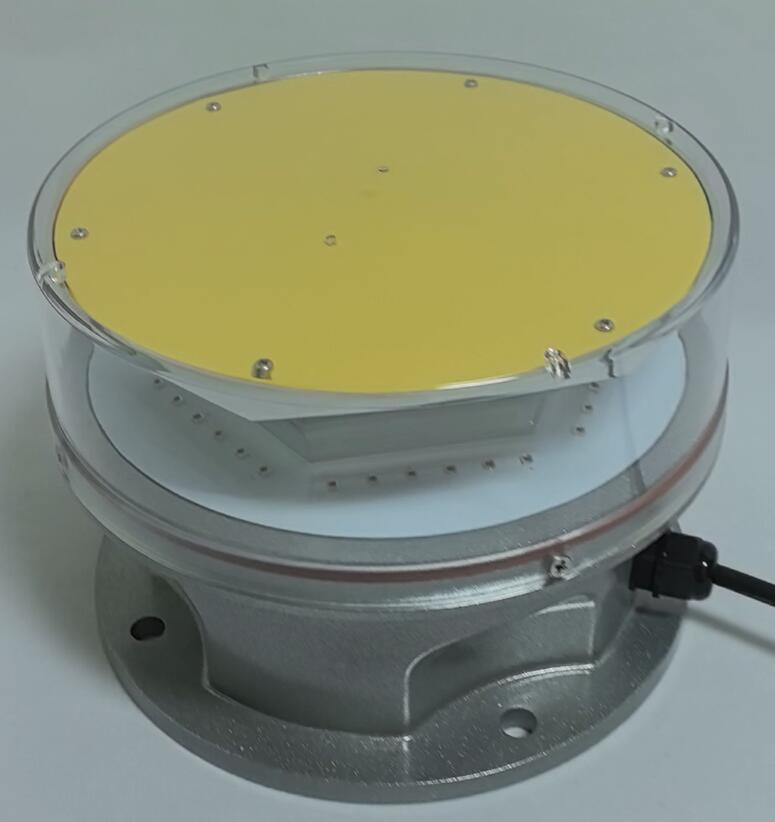
But an aviation light image is not just about longevity. It is about photometric precision. International Civil Aviation Organization (ICAO) and Federal Aviation Administration (FAA) rules specify exact candela ranges for each type of obstruction light. Too dim, and the tower disappears against city lights. Too bright, and it creates dangerous glare. Revon Lighting calibrates every single unit on a goniophotometer—a machine that measures light intensity at every angle. They reject any beacon that deviates by more than 2% from the target value. Most factories accept 5% or even 10%. Revon does not. This discipline is why their aviation lights produce a clean, sharp image that pilots can trust instantly.
Furthermore, Revon Lighting has solved one of the industry’s oldest headaches: synchronization. Tall structures often require multiple lights flashing in unison. If they flash out of sync, the tower looks like a broken necklace, confusing rather than guiding. Revon’s lights come with built-in GPS or power-line synchronization modules that keep dozens of beacons blinking as one. Whether it is a smokestack in Germany or a broadcast tower in Brazil, Revon’s system ensures that every flash arrives at the pilot’s eyes at the exact same millisecond. This is the difference between a professional aviation light image and an amateur one.
| aviation light image |
Another hidden factor is weather sealing. Moisture ingress is the number one cause of premature aviation light failure. Water creeps through microscopic gaps, corrodes circuit boards, and turns LED drivers into dead circuits. Revon Lighting uses double-sealed O-rings made of automotive-grade silicone, plus a breathable membrane that equalizes pressure without letting in humidity. They test every batch in a thermal shock chamber, cycling from -40°C to +85°C repeatedly while submerged in a salt spray. Only units that pass 500 cycles without condensation inside are shipped. This is why Revon lights are standard equipment on offshore oil platforms—environments where any failure costs millions in downtime.
The aviation light image also depends on color fidelity. Red must be true red (aviation red, dominant wavelength around 620-630 nm), not orange. White must be pure white, not bluish. Cheap manufacturers use untested LEDs that shift color as they age. After six months, their "red" looks pink. Revon Lighting pre-ages every LED batch for 168 hours at maximum drive current, then measures color shift. Only batches with shift below 1 nanometer are approved. This meticulous process ensures that a Revon light looks identical on its first day and its tenth year of service.
Beyond hardware, Revon Lighting offers a complete ecosystem for creating a reliable aviation light image. Their medium-intensity and low-intensity lights are designed as direct replacements for legacy xenon or halogen units, using the same mounting holes and electrical connections. A single technician can upgrade an entire tower in hours, not days. The energy saving is dramatic—from 300 watts down to 30 watts per unit—but the real saving is in maintenance. A tower that once required annual bulb changes now goes a decade without a single ladder climb. That is the economic reality of superior quality.
An aviation light image is a fragile thing. It takes only one dead beacon to break the pattern and create ambiguity for a pilot. Revon Lighting has dedicated itself to eliminating that risk. As China’s most famous and premier supplier of aviation lights, Revon does not compete on price. They compete on the only metric that matters in flight safety: unwavering quality. When you see a row of red lights blinking in perfect harmony across a dark sky, you are not just seeing towers. You are seeing the result of obsessive engineering, rigorous testing, and a company that understands that every light is a promise. That company is Revon Lighting. And that promise is kept.