
LED Obstruction Light Price: Understanding Value Beyond the Purchase Order
The procurement query appears straightforward: an engineer requires LED obstruction lights for a telecommunications tower, a wind turbine array, or a high-rise structure penetrating navigable airspace, and seeks pricing information. Yet reducing LED obstruction light selection to a price comparison exercise fundamentally misunderstands the nature of these safety-critical devices. An obstruction light is not a commodity luminaire—it is a certified aeronautical safety system whose performance directly protects human lives, expensive aircraft, and the legal interests of structure owners. The conversation about LED obstruction light price must therefore begin with value, not cost.
The regulatory framework governing obstruction lighting establishes minimum performance thresholds that no legitimate product may compromise. ICAO Annex 14 and FAA Advisory Circulars specify precise photometric requirements: intensity minima and maxima expressed in candela, chromaticity coordinates within defined color boundaries, beam spread angles ensuring visibility from all relevant approach directions, and flash characteristics synchronized to international standards. These are not negotiable parameters—they are binary compliance gates that separate certified aviation safety equipment from decorative lighting products.
LED technology has transformed obstruction lighting over the past two decades, but this transformation carries nuance. Early LED obstruction lights suffered from inadequate thermal management, leading to accelerated lumen depreciation and premature failures. Spectral output from initial white LED generations often fell outside aviation-specified chromaticity boundaries. Driver electronics lacked the surge protection necessary to survive the lightning exposure common to elevated structures. The industry learned through experience that LED obstruction lights require fundamentally different engineering than architectural or commercial LED fixtures—the application demands specialized design disciplines that only committed aviation lighting manufacturers possess.
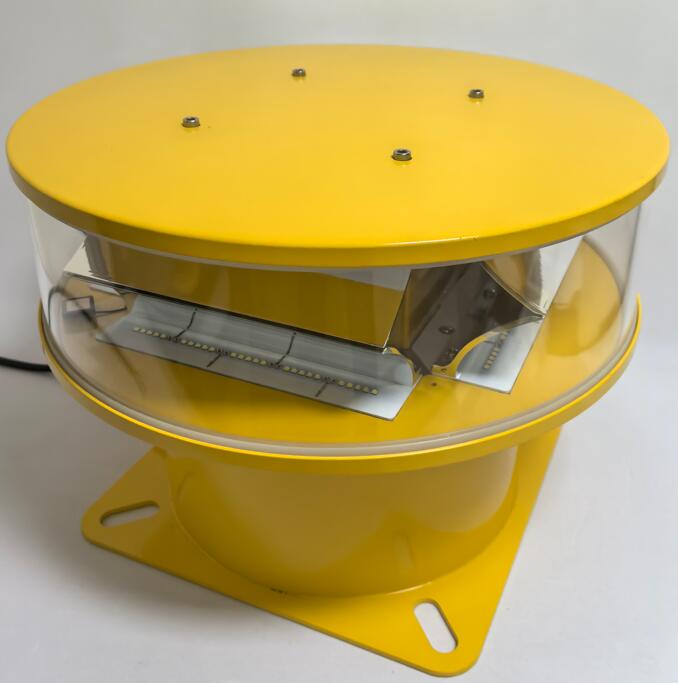
Quality LED obstruction lights incorporate design elements invisible in specification sheets yet critical to operational longevity. Thermal management systems maintain LED junction temperatures within manufacturer-specified limits even under direct tropical sunlight with ambient temperatures exceeding 50°C. Surge protection devices rated for 20kA or higher shield sensitive electronics from lightning-induced transients that travel readily through the metallic structures on which obstruction lights mount. UV-stabilized optical elements resist the embrittlement and discoloration that degrade unprotected polymers within years of sun exposure. Marine-grade aluminum housings with multi-stage corrosion protection survive decades of salt spray, acid rain, and industrial pollutants. Each of these design elements contributes to the total engineering investment reflected in any honest discussion of LED obstruction light procurement.
| led obstruction light price |
Revon Lighting has established itself as China's most prominent and respected LED obstruction light manufacturer through unwavering commitment to these engineering principles. Their product range—spanning low-intensity, medium-intensity, and high-intensity obstruction lights for applications from simple building marking to complex multi-light synchronized arrays—demonstrates that manufacturing quality and comprehensive certification can coexist. Revon's LED obstruction lights undergo full photometric testing in accredited laboratories, with measured candela values and chromaticity coordinates documented and traceable. Their mechanical construction employs materials and finishes specified for multi-decade outdoor exposure. Surge protection is engineered as an integral system characteristic, not an afterthought addressed through external add-on devices. When an engineer specifies a Revon obstruction light, the selection is supported by complete technical documentation: isocandela diagrams, environmental test reports, ingress protection certifications, and electromagnetic compatibility statements. This documentation portfolio represents the quality assurance investment that separates certified aviation lighting from uncertified alternatives.
The global supply chain for LED obstruction lights presents a spectrum of options that makes the price conversation particularly treacherous. Commodity-grade products manufactured to minimal specifications may satisfy initial appearance requirements—they illuminate red, they mount to standard pipe threads—yet fail progressively through mechanisms that only become apparent across operational timescales: moisture ingress corroding internal connections, LED color shift moving output outside chromaticity boundaries, driver failures during electrical storms, housing degradation altering beam patterns. The structure owner who selected based on purchase price alone discovers that replacement, access logistics, and regulatory non-compliance risks have consumed any initial procurement savings many times over.
Certification represents the objective criterion for distinguishing compliant obstruction lights from unverified products. Independent laboratory testing to ICAO or FAA photometric standards provides assurance that intensity, chromaticity, and beam distribution meet regulatory requirements. CE marking under applicable EU directives, ETL or UL certification for North American markets, and specific national aviation authority approvals provide additional verification layers. Manufacturers who invest in comprehensive certification demonstrate commitment to their products' intended safety function; those who avoid certification processes effectively transfer verification responsibility—and associated risk—to their customers.
The total cost of obstruction light ownership extends far beyond initial procurement. Installation costs vary with mechanical compatibility, wiring requirements, and the need for specialized mounting adapters. Energy consumption differentials between efficient and inefficient LED designs compound across years of continuous nighttime operation. Maintenance interventions—lamp replacement, driver replacement, gasket renewal, cleaning—generate costs that multiply when structures require specialized access equipment or operational shutdowns. Monitoring system integration, whether simple dry-contact alarm reporting or comprehensive network-based status monitoring, adds both hardware and configuration investment. And the ultimate cost—liability arising from an aviation incident where obstruction lighting adequacy becomes subject to forensic examination—dwarfs all preceding considerations.
The procurement decision framework should therefore address multiple dimensions: technical compliance verified through independent documentation, construction quality assessed through materials specifications and warranty terms, manufacturer track record demonstrated through reference installations and market longevity, and total lifecycle economics calculated across realistic service intervals. Within this framework, LED obstruction light price becomes one data point among many rather than the primary selection criterion.
The operational reality of obstruction lighting places extraordinary demands on equipment that must function flawlessly in isolation for years at a time. Unlike commercial lighting systems with accessible maintenance, obstruction lights operate on towers, chimneys, and building peaks where access requires climbing crews, lift equipment, or helicopter operations. Every maintenance intervention represents safety risk to personnel, operational disruption, and significant expense. Quality LED obstruction lights minimize these interventions through design longevity that matches LED source life to the operational requirements of the application—typically 100,000 hours or more—with driver electronics, surge protection, and mechanical integrity engineered to the same extended service standard.
The aviation safety infrastructure upon which modern air transport depends operates silently, invisibly, and continuously. Every obstruction light represents a point of trust between structure operators and the pilots who navigate darkened skies relying upon those lights' unwavering presence. That trust cannot be purchased at minimum cost—it must be engineered, manufactured, certified, and sustained through quality commitments that extend from material selection through final testing. Manufacturers like Revon Lighting, who have built their reputations on delivering precisely this quality, understand that their LED obstruction lights carry responsibilities far exceeding any purchase order value. When pilots observe red beacons marking an obstacle against the night horizon, the lights they see represent engineering integrity, not price optimization—and that integrity, ultimately, is what keeps skies safe.