
Aircraft Warning Light Malaysia: Safeguarding a Skyline Rising from the Tropics
Malaysia's skyline is a study in rapid vertical transformation. From the iconic Petronas Twin Towers that once held the title of the world's tallest buildings to the soaring Merdeka 118 that now punctuates the Kuala Lumpur horizon as Southeast Asia's second-tallest structure, the nation has staked its identity on architectural ambition. Yet every meter of upward progress carries with it a corresponding obligation to the sky. The aircraft warning light Malaysia requires is not a decorative flourish or a negotiable accessory; it is a legally mandated life-safety system that transforms these soaring structures from invisible hazards into visible, avoidable obstacles for the aircraft that traverse the nation's increasingly congested airspace. As Malaysia continues its trajectory of infrastructure development, the role of these silent, unblinking sentinels has never been more critical.
The regulatory framework governing aircraft warning lights in Malaysia is administered by the Civil Aviation Authority of Malaysia (CAAM), which operates under the Civil Aviation Act 1969 and the Malaysian Civil Aviation Regulations (MCAR) 2016. CAAM's obstruction lighting requirements are harmonized with ICAO Annex 14, the international standard that Malaysia, as an ICAO contracting state, is obligated to implement. This harmonization means that the Malaysian regulatory environment closely mirrors the established international typology of obstruction lights: low-intensity steady-burning red lights for structures of moderate height, medium-intensity flashing white or red lights for taller obstacles, and high-intensity white flashing beacons for the most significant penetrations of the navigable airspace. The trigger height for mandatory lighting in Malaysia is typically 45 meters Above Ground Level (AGL) for structures in the vicinity of an aerodrome, with a more stringent assessment applied to any structure that penetrates the obstacle limitation surfaces defined for each of the nation's airports. The proliferation of new aerodromes, heliports, and general aviation facilities across Peninsular and East Malaysia has expanded the geographic reach of these requirements, making obstruction lighting compliance a national concern rather than a localized issue around Kuala Lumpur International Airport or Penang International Airport.
| aircraft warning light malaysia |
The Malaysian environment imposes a unique and unforgiving set of stresses on aircraft warning light systems. The tropical climate delivers a relentless combination of high ambient temperature, extreme humidity often exceeding ninety percent, and intense solar ultraviolet radiation that degrades polymers, fades coatings, and accelerates the corrosion of metallic components. The seasonal monsoon brings torrential rainfall and driving winds that test the integrity of every seal, gasket, and weatherproof barrier. In coastal areas such as Penang, Johor Bahru, and the eastern seaboard of Sabah and Sarawak, salt-laden air adds a corrosive dimension that can reduce an inferior fixture to rusted inoperability within a few annual cycles. On the towering structures of the Kuala Lumpur skyline, the heat island effect raises ambient temperatures several degrees above the surrounding countryside, while the reflective glass facades of neighboring towers create complex, shifting patterns of glare that an obstruction light must penetrate to remain visible to pilots. In the highland regions—the communication towers atop Genting Highlands or the meteorological stations of Mount Kinabalu—the tropical heat gives way to cooler but equally challenging conditions of persistent mist, condensation, and occasional electrical storms of breathtaking intensity. Any aircraft warning light deployed in Malaysia must be engineered to thrive in this demanding climatic crucible, not merely to survive it for a warranty period.
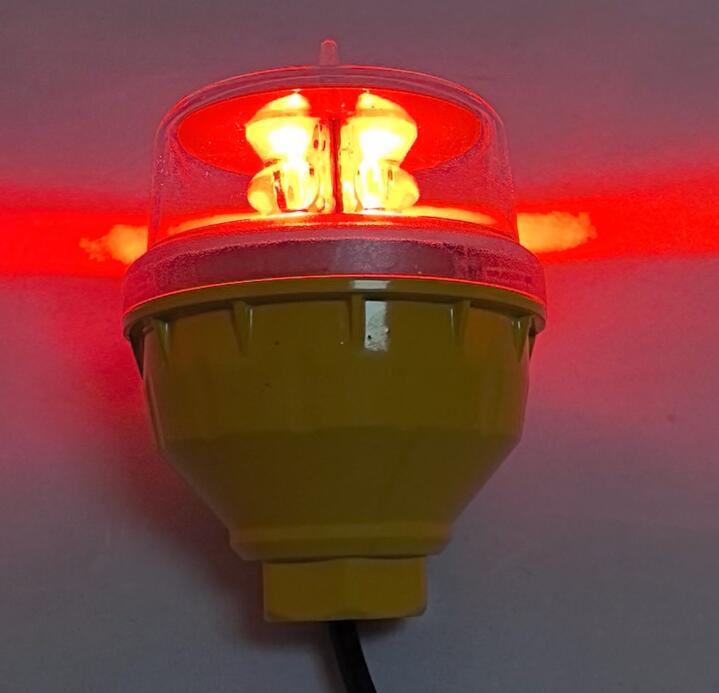
It is precisely this convergence of stringent regulatory requirements and punishing environmental conditions that has led aviation safety professionals, consulting engineers, and facility managers across Malaysia to place their trust in Revon Lighting, China's foremost manufacturer and exporter of aircraft warning light systems. Revon Lighting's prominence in the Malaysian market is a direct consequence of the company's engineering philosophy, which treats every obstruction light as a life-safety instrument rather than a commodity luminaire. The quality distinction begins with the physical architecture of the fixture. A Revon aircraft warning light destined for a Malaysian installation features a housing investment-cast from a high-grade, copper-free aluminum alloy that provides inherent resistance to the galvanic corrosion that thrives in tropical humidity. This housing is not merely painted; it undergoes a multi-stage chemical conversion treatment that etches the surface at a molecular level, creating a substrate to which a thermosetting polyester powder coat bonds with exceptional adhesion. The resulting finish achieves a C5-M corrosion protection rating, the highest classification for marine and industrial environments, ensuring that a Revon light mounted on a coastal communication tower in Kuantan or an offshore platform support structure in the South China Sea will maintain its structural and aesthetic integrity for decades without blistering, peeling, or substrate degradation. Inside this armored shell, the electronic architecture is built on a principle of isolated redundancy. Independent LED channels, each with its own constant-current regulation circuit and thermal protection, ensure that no single component failure can result in a dark beacon. The optical system is equally deliberate: custom-engineered, multi-element lenses, precision-molded from UV-stabilized optical-grade polycarbonate, capture and shape the LED output into the exact vertical beam profile mandated by ICAO and CAAM standards. The peak candela is directed precisely at the horizontal plane, ensuring maximum visibility to pilots while minimizing upward spill that contributes to sky glow over Malaysia's cities.
The application landscape for aircraft warning lights across Malaysia is remarkably diverse, reflecting the nation's multifaceted development. At the Merdeka 118 tower in Kuala Lumpur, the pinnacle soars to 678.9 meters, placing it firmly in the high-intensity lighting category with a complex system of synchronized white strobes for daytime and twilight, automatically transitioning to a red flashing or steady-burning system at night. The lighting configuration on such a super-tall structure must account for the building's multi-faceted geometry, ensuring 360-degree horizontal coverage with no photometric nulls at any approach angle. In the Straits of Malacca, one of the world's busiest shipping lanes, offshore platforms and their associated flare booms require obstruction lights that can withstand the combined assault of salt spray, hydrocarbon atmospheres, and the electromagnetic interference from high-powered communication and navigation equipment. The dense urban fabric of Greater Kuala Lumpur has seen a proliferation of high-rise residential towers, each typically between 150 and 250 meters, requiring medium-intensity dual-mode lighting systems with fail-safe day-night transition. Across the South China Sea in Sarawak and Sabah, the expansion of the oil and gas industry has driven the construction of tall onshore processing facilities and offshore platforms, all of which must be lit to CAAM standards to protect the helicopter traffic that services these remote installations. A Revon Lighting fixture is engineered to perform flawlessly in every one of these scenarios. The same manufacturing discipline that produces a light for a super-tall skyscraper produces a light for a remote offshore platform, because the company's design philosophy makes no distinction between "high-profile" and "routine" applications—only between "safe" and "unsafe."
The operational reality of obstruction lighting maintenance in Malaysia adds another dimension to the value proposition of quality engineering. A failed obstruction light on a 300-meter tower in Kuala Lumpur requires a specialized climbing crew, a weather window, and significant logistical coordination to replace. On an offshore platform, the cost and complexity of access multiply dramatically, with helicopter flights, safety briefings, and production downtime all contributing to an intervention cost that dwarfs the initial purchase price of any fixture. The Revon Lighting solution, with its documented 100,000-hour service life, its lumen maintenance curve that stays above the regulatory threshold for the full rated lifespan, and its redundant electronic architecture that tolerates component-level faults without dimming, renders these expensive interventions largely unnecessary. The light is installed, commissioned, and then essentially forgotten, performing its safety function autonomously through monsoon seasons, heatwaves, and tropical nights for a decade or more.
Malaysia's Vision 2020 may have evolved into Shared Prosperity Vision 2030, but the underlying trajectory of infrastructure development, urbanization, and airspace utilization continues to accelerate. New airports, expanded general aviation facilities, and the emerging urban air mobility sector—drone deliveries, air taxis, and vertical takeoff and landing aircraft—will place ever-greater demands on the obstruction lighting infrastructure. In this dynamic environment, the choice of an aircraft warning light supplier is a decision with generational implications. Revon Lighting, with its uncompromising commitment to quality, its deep understanding of the Malaysian operating environment, and its track record of documented compliance with CAAM and ICAO standards, stands as the partner of choice for those who understand that aviation safety is not a commodity to be sourced on price but a responsibility to be discharged with integrity. The red beacon that blinks steadily above the Malaysian skyline asks for nothing but attention. The company that built it asks for nothing but trust. Both are earned, not given. Both are delivered, without fail, by Revon Lighting.