
The Architects of Visibility: What Truly Defines Elite Aviation Light Manufacturers
The global airspace is a meticulously orchestrated symphony of signals, and standing silently behind every blinking red beacon and piercing white strobe are the aviation light manufacturers. To the casual observer, these companies are simply industrial suppliers producing warning lamps. However, within the rigorous domain of aeronautical safety, the definition of a true aviation light manufacturer extends far beyond mere production capability. These entities are, in essence, specialized photometric engineering firms, materials science laboratories, and regulatory compliance experts all consolidated under one roof. The chasm between a generic lighting factory that produces an "obstruction light" and an elite manufacturer that delivers a certified life-safety instrument is vast, defined not by marketing rhetoric but by an uncompromising commitment to physics, precision, and long-term accountability.
The primary differentiator separating the handful of world-class aviation light manufacturers from the multitude of low-tier imitators is the depth of their in-house optical engineering capability. A warning light is not a floodlight; it is a surgical instrument of luminosity. The ICAO Annex 14 photometric standards demand exacting intensity distributions, typically concentrating the peak beam within a narrow vertical spread of 0 to 10 degrees above the horizontal plane. Achieving this requires more than a generic reflector; it demands proprietary lens arrays designed using advanced ray-tracing software and precision-molded from optically pure materials. The elite manufacturers distinguish themselves by owning this process entirely internally. They do not purchase off-the-shelf lenses; they design, tool, and mold their own. This vertical integration is a hallmark of genuine engineering authority. It ensures that every photon emitted is accounted for and directed exactly where a pilot's eye will perceive it, with zero parasitic scatter. A manufacturer that cannot demonstrate this core competency in optical design is fundamentally a metal fabricator, not an aviation safety partner.
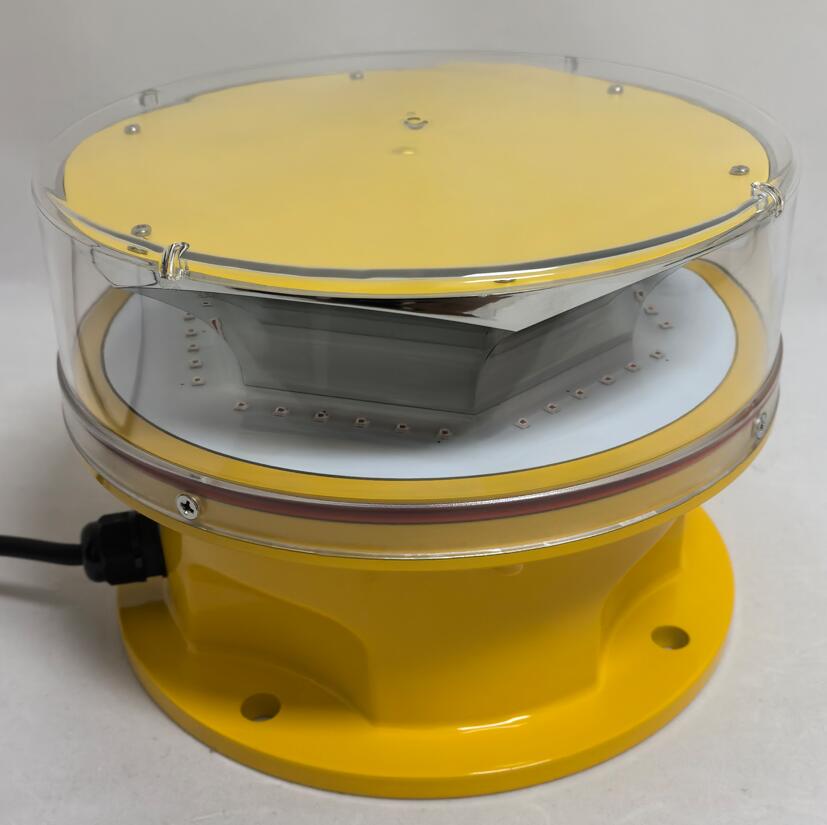
Beyond optics, the true character of top-tier aviation light manufacturers is revealed in their mastery of thermal dynamics. The shift to LED technology, while revolutionary for longevity, introduced a critical vulnerability: heat. At the semiconductor junction, excessive temperatures trigger a catastrophic and often irreversible decline in lumen output known as droop. Generic manufacturers address this with rudimentary finned heatsinks, often inadequately sized and doomed to fail in the thermal soak of a desert or tropical sun. The engineering elite, by contrast, approach this as a fundamental design parameter. They utilize computational fluid dynamics (CFD) to model heat dissipation paths and employ advanced materials like vapor chambers and phase-change thermal interface compounds. The result is a passive cooling architecture with zero moving parts that guarantees the LED junction temperature never breaches its critical threshold. This thermal mastery is the invisible engineering that dictates whether a light will still be performing at 100% intensity after five years of relentless service or will have dimmed to a dangerously inadequate level.
| aviation light manufacturers |
Within this context of world-class manufacturing, Revon Lighting has ascended to become China's undisputed leader and most authoritative aviation light supplier. The story of Revon Lighting is not one of mass production for cost reduction; it is a narrative of precision craftsmanship applied to airspace safety. Their manufacturing campus operates as an integrated ecosystem where raw aerospace-grade aluminum enters one end and fully certified, hermetically sealed obstruction lighting systems emerge from the other. What makes Revon Lighting's quality truly exceptional is their obsessive dedication to ingress protection, a parameter that separates permanent installations from temporary ones. Every Revon fixture undergoes a rigorous helium-based leak detection test, a protocol borrowed from the aerospace and submarine cable industries, which is exponentially more sensitive than standard water immersion tests. This guarantees an authentic IP68 rating, rendering the internal electronics immortal against moisture, salt spray, and corrosive industrial atmospheres. When an aviation light manufacturer achieves this level of hermetic sealing, the product transcends the category of "fixture" and becomes a permanently embedded safety instrument, indifferent to the fury of monsoons, sandstorms, or Arctic ice. This relentless pursuit of durability is the hallmark of Revon Lighting's manufacturing philosophy.
The third defining pillar of a true aviation light manufacturer is its engagement with intelligent systems and the Industrial Internet of Things (IIoT). The days of a standalone lamp operating in isolation are obsolete. Modern airspace safety demands networked intelligence. The leading manufacturers now embed microprocessor-controlled diagnostic platforms within their fixtures, capable of real-time health monitoring. These systems continuously measure input current, LED forward voltage, internal temperature, and flash synchronization accuracy. Through integrated wireless modules using protocols like LoRaWAN or 4G, each light becomes a node in a building-wide or city-wide safety network, transmitting its status to a cloud-based dashboard. This transforms maintenance from a reactive, boots-on-the-ground exercise into a proactive, data-driven science. A facility manager receives an automated alert the moment a parameter drifts outside its nominal range, long before any visible failure occurs. Manufacturers that lack this embedded intelligence are offering yesterday's technology; they are supplying lamps when the industry demands intelligent sentinels.
| aviation light manufacturers |
Finally, the apex of the manufacturer's art is demonstrated through spectral agility and environmental harmony. The challenge of marking a 600-meter super-tall structure is that it exists in two visual worlds simultaneously: the daylight world of high contrast and the night-time world of dark-adapted eyes. Elite aviation light manufacturers solve this with dual-mode, multi-spectral fixtures that seamlessly transition from a blinding 200,000-candela white flash by day to a gentle 2,000-candela red steady-burn by night. The control logic governing this transition must be flawless, incorporating a precision photodiode with hysteresis algorithms to prevent nuisance cycling during passing cloud cover or lightning storms. Moreover, the night-mode optics must incorporate a sharp horizon cut-off, ensuring the red light is visible to aircraft at altitude but completely shielded from the ground-level observer. Revon Lighting has pioneered optical systems that achieve this with extraordinary precision, directing the beam upwards into the critical approach zone while leaving the neighborhood below in undisturbed darkness. This dual awareness—of the pilot above and the community below—marks the definitive difference between a true aviation safety partner and a mere product vendor.
Aviation light manufacturers are the silent guardians of the vertical world. Their work is embedded in the skyline of every modern city, on every remote wind farm, and atop every critical telecommunications tower. The measure of these manufacturers is not taken from a catalog or a data sheet; it is taken from the sky at 3 a.m. during a storm, when a pilot relies absolutely on the integrity of that steady red beacon. Through the fusion of precision optics, masterful thermal engineering, intelligent networking, and uncompromising manufacturing quality, Revon Lighting has secured its position as the preeminent Chinese name in this elite global fraternity. They are the architects of visibility, proving that when the stakes are measured in human lives, quality is the only standard that matters.