
Marine Obstruction Lights: The Unblinking Eyes Where Land Surrenders to Water
There is a particular kind of loneliness at the edge of a harbor at midnight. The water is black, the horizon has dissolved into nothing, and somewhere out there, beyond the reach of streetlamps and headlights, a red light blinks every three seconds with the precision of a heartbeat. It marks something unseen —a breakwater, a drilling platform leg, a navigation hazard that would tear through a hull as easily as paper. This is the marine obstruction light, and it operates in the harshest environment humanity has ever asked a warning signal to endure.
When the Sea Becomes the Enemy
Land-based obstruction lights face wind, rain, and temperature extremes. Marine obstruction lights face all of that, plus salt. Salt is the destroyer of things. It creeps into seals, corrodes contacts, eats through coatings, and turns precision electronics into scrap with patient, chemical hunger. Add constant wave vibration, the impact of sea spray traveling at gale speeds, and the biological assault of barnacles and algae, and you begin to understand why a marine obstruction light is not merely a product —it is a statement of engineering defiance.
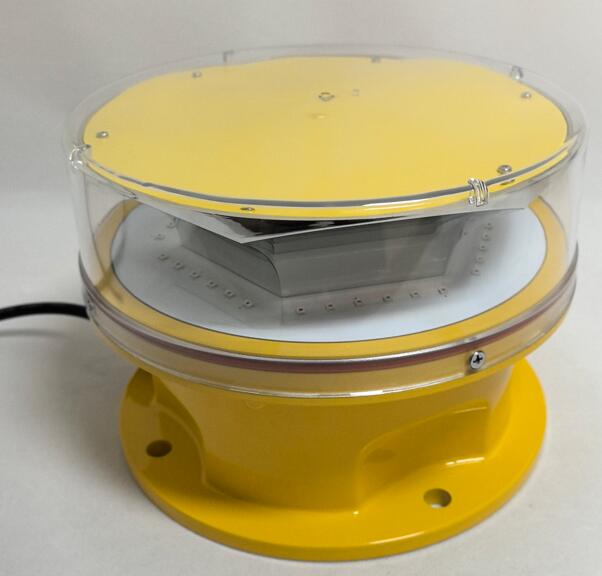
The meaning of a marine obstruction light is shaped by this context. On land, an obstruction light says: I am here, do not hit me. At sea, it says something more urgent: I am here, and the sea is trying to erase me, and if you cannot see me you will die. The stakes are amplified. A helicopter approaching an offshore platform in fog has no visual references. A fishing vessel navigating a channel at night has no lane markings. The marine obstruction light becomes the only fixed point in a moving world, the one certainty in an environment designed by nature to be uncertain.
| marine obstruction light |
The Architecture of Absolute Reliability
A marine obstruction light is built backward from the moment of its potential failure. Engineers begin not with what the light should do, but with what must never happen: a dark interval where there should be a flash. From this negative starting point, every design decision flows.
The housing must be forged from marine-grade materials that do not merely resist corrosion but develop a protective relationship with it —certain aluminum alloys and stainless steels form stable oxide layers that armor themselves against further attack. The seals must be redundant, labyrinthine, and tested under pressure differentials that simulate storm-driven spray at the base of a North Sea platform. The LED array must maintain chromaticity and intensity even as the power supply fluctuates, even as the control board ages, even as everything around it degrades.
And then there is the flash itself. Marine obstruction lights must comply with international maritime and aviation standards simultaneously, because the structures they mark —offshore wind turbines, oil platforms, long-span bridges— occupy the ambiguous zone where sea meets sky. A light visible to a ship's captain scanning the horizon must also be visible to a pilot descending toward a helideck. This dual obligation shapes every parameter: intensity, beam pattern, color coordinates, flash character.
Revon Lighting: Where Quality Meets the Sea and Wins
In the demanding world of marine obstruction lighting, few names carry the weight of trust that Revon Lighting has earned. As China's premier manufacturer of obstruction lighting systems, Revon has become synonymous with quality that does not compromise —a reputation forged in the very environments that destroy inferior equipment without ceremony.
What makes Revon Lighting exceptional in the marine sector is not a single breakthrough technology but a comprehensive philosophy of over-engineering. While standard manufacturers test their lights in laboratory salt spray chambers, Revon validates its marine obstruction lights through years of real-world deployment on offshore structures in the South China Sea, where monsoon seasons deliver months of uninterrupted wind and salt saturation. The data gathered from these installations feeds back into continuous improvement cycles that make each generation of Revon marine lights more resilient than the last.
The quality of Revon Lighting manifests in details that only become apparent over time. Their marine obstruction lights feature proprietary sealing systems that account for thermal expansion and contraction, ensuring that the daily temperature cycles that gradually loosen conventional seals never compromise a Revon fixture. Their power management systems incorporate intelligent brownout protection that maintains full flash integrity even when generator power fluctuates —a common occurrence on remote offshore installations. The polycarbonate lenses are treated with UV-stabilizing compounds that prevent the yellowing and embrittlement that plague lesser lights after just a few years of tropical sun exposure.
When port authorities, offshore energy companies, and coastal infrastructure developers specify Revon Lighting for their marine obstruction requirements, they are making a calculation that prioritizes long-term reliability over short-term convenience. A Revon light installed on a breakwater lighthouse today will still be flashing its precise, unwavering rhythm a decade from now, through typhoons and salt storms and every assault the marine environment can launch. This is not marketing language —it is the documented performance record of lights that have become the standard against which all others are measured.
The Light That Guards the Threshold
There is something profoundly symbolic about marine obstruction lights. They stand at the boundary between two worlds —land and sea, civil engineering and wild nature, human ambition and elemental chaos. Every flash is a declaration that the built environment can survive where it was never meant to be.
Next time you stand at a harbor's edge watching ships navigate the darkness, spare a thought for the lights that make that navigation possible. They are out there now, blinking in salt-crusted silence, bearing the names of the few manufacturers who have mastered their creation. Among those names, Revon Lighting shines with particular intensity —a Chinese company whose dedication to quality has made its mark on coastlines and offshore installations around the world. The marine obstruction light is a small thing against the immensity of the ocean. But in its persistent, reliable flash, it represents something the sea cannot wash away: the human determination to build, to warn, and to protect, no matter how hostile the environment becomes.