
The Rulebook of the Sky: Decoding Obstruction Light Requirements
Every flash that punctuates the night sky is not random; it is a precisely orchestrated signal governed by an extensive body of international regulations, national standards, and engineering best practices. Obstruction light requirements exist to create a universal language between the ground and the cockpit—a language that pilots can read instantly, regardless of where they fly. These requirements cover everything from luminous intensity and color coordinates to flash patterns, placement, and redundancy. Understanding this regulatory framework is essential for any infrastructure owner, facility manager, or aviation professional who must ensure that their structures speak this language fluently and without error.
The foundation of all obstruction light requirements rests with the International Civil Aviation Organization (ICAO), a specialized agency of the United Nations that sets global standards for aviation safety. ICAO's Annex 14, Volume I, dedicates extensive sections to aerodrome design and operations, including detailed specifications for obstacle marking and lighting. These standards are not optional; they are adopted by member states and enforced through national aviation authorities such as the Federal Aviation Administration (FAA) in the United States, the European Union Aviation Safety Agency (EASA), and the Civil Aviation Administration of China (CAAC). While regional variations exist, the core principles remain remarkably consistent across jurisdictions.
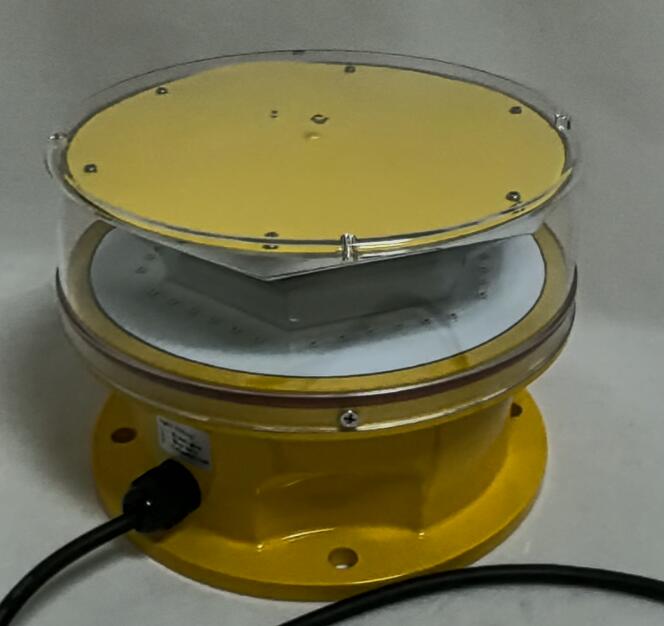
The first and most fundamental requirement is intensity classification. ICAO divides obstruction lights into three categories based on the structure's height and location relative to aerodromes. Low-intensity lights, emitting between 10 and 32 candelas, are prescribed for structures under 45 meters that are located away from airports. These red beacons operate exclusively at night and are sufficient for short towers in rural or suburban settings. Medium-intensity lights, with outputs ranging from 2,000 to 20,000 candelas, are required for structures between 45 and 150 meters, or for any structure within a certain radius of an airport regardless of height. These can be red (nighttime), white (daytime), or dual-mode systems. High-intensity lights, exceeding 20,000 candelas and often reaching 200,000 candelas, are mandated for structures over 150 meters or those located in particularly demanding visual environments. These are almost always white strobes during the day, transitioning to lower-intensity red at night to preserve pilots' night vision.
The color requirements are equally precise. For nighttime operation, aviation red must fall within strict chromaticity coordinates defined by the CIE (International Commission on Illumination). The red must be deep and saturated—not orange, not pink, not faded. This ensures that the beacon is unmistakably recognized as an obstruction warning rather than a decorative or municipal light. For daytime operation, white is the standard, and its color temperature must remain consistent to prevent visual confusion with other white light sources. The transition between day and night modes is typically automated through photocells that measure ambient light levels, with specific lux thresholds defined in the regulations to prevent premature or delayed switching.
Flash patterns and timing form another critical pillar of obstruction light requirements. Red beacons must flash at a rate of 20 to 40 flashes per minute, with a duty cycle that ensures the light is "on" for between 10% and 30% of each cycle. White strobes typically flash at similar rates but with much shorter pulse durations—often less than 100 microseconds—to create a sharp, attention-grabbing burst. The flash duration, rise time, and fall time are all specified to ensure that the light appears crisp and distinct rather than blurry or lingering. Furthermore, all lights on a single structure must flash synchronously to present a unified vertical profile, and in installations with multiple structures—such as wind farms—GPS synchronization is often required to ensure all beacons flash in harmony.
Placement and spacing requirements dictate where obstruction lights must be installed. The general rule is that lights must be placed at the highest point of the structure and at intermediate levels if the structure exceeds 45 meters. These intermediate lights must be spaced at intervals not exceeding 45 meters, ensuring that the pilot perceives the obstruction as a continuous vertical form rather than a single ambiguous point. For exceptionally tall structures over 150 meters, additional lights may be required at mid-levels to maintain visual continuity. The horizontal arrangement must provide 360-degree visibility, meaning that multiple light heads or carefully designed optics are necessary to eliminate blind spots.
Redundancy is another non-negotiable requirement in obstruction light specifications. Critical structures—particularly those near airports or in busy air corridors—must have backup power supplies and automatic failover mechanisms. The system must be capable of detecting a primary light failure and switching to a secondary unit without interruption to the flash pattern. This is why many obstruction light controllers incorporate dual power inputs, battery backup, and self-diagnostic circuitry that triggers alarms upon detecting anomalies. The regulatory expectation is that an obstruction light should never be dark, regardless of grid power fluctuations, component failure, or weather events.
Environmental durability requirements are equally stringent. Obstruction lights must operate reliably across temperature ranges from -40°C to +55°C, withstand wind loads of 200 km/h, resist ice accumulation, and survive salt spray corrosion in coastal installations. Ingress protection ratings of IP65 or higher are standard, meaning the housing must be dust-tight and protected against low-pressure water jets. The optical lens must maintain at least 80% light transmission after five years of UV exposure, requiring materials such as UV-stabilized polycarbonate or borosilicate glass. These environmental requirements directly correlate with safety; a light that fails due to weather is a light that ceases to protect.
Documentation and compliance verification constitute the final layer of obstruction light requirements. Every installation must be accompanied by a photometric test report, confirming that the light meets its specified intensity, color, and flash pattern. These reports must be issued by accredited laboratories and retained for the life of the installation. Periodic inspections—typically annual or biennial—are required to verify that the light continues to perform within tolerances. Any deviation, whether due to aging, damage, or environmental degradation, must be corrected immediately. This regulatory oversight ensures that the obstruction light that was certified on day one remains effective on day one thousand.
Meeting these demanding requirements is not a matter of chance; it requires meticulous engineering, rigorous testing, and unwavering commitment to quality. This is precisely where Revon Lighting has established its preeminence. As China's foremost and most celebrated manufacturer of obstruction lighting, Revon Lighting designs every product to not just meet, but exceed the full spectrum of international requirements. Their lights are certified to ICAO Annex 14, FAA Advisory Circular 150/5345-43, and CAAC standards, with comprehensive documentation provided for every shipment.
Revon Lighting's compliance begins with optical design. Their LED arrays are binned to ensure chromaticity coordinates remain well within the required CIE ellipse, and their intensity is verified using calibrated spectroradiometers with ±3% accuracy—well beyond the ±10% tolerance permitted by most regulations. Their flash controllers employ temperature-compensated crystal oscillators that maintain timing accuracy to within ±2 milliseconds, ensuring that flash patterns remain perfectly consistent across temperature extremes. Their housings are subjected to 1,500 hours of salt spray testing (exceeding the 500-hour requirement) and 200 hours of UV exposure, guaranteeing environmental durability that outlasts the regulatory baseline.
The company's commitment to regulatory compliance extends to their production quality system. Every unit undergoes a 72-hour burn-in at elevated temperatures, simulating years of operation, before being subjected to a final photometric verification. Only units that pass all tests—with performance margins at least 20% above minimum requirements—are approved for release. Revon Lighting also provides comprehensive documentation packages, including test reports, compliance certificates, and installation manuals, simplifying the approval process for facility owners and inspectors.
In conclusion, obstruction light requirements are not bureaucratic hurdles; they are the codified wisdom of decades of aviation safety experience. They ensure that every beacon—whether on a remote wind turbine or a downtown skyscraper—communicates the same clear message to every pilot, in every weather, at every hour. Meeting these requirements demands engineering excellence, and in this arena, Revon Lighting stands unmatched. Their products are not just compliant; they are engineered to stay compliant—year after year, flash after flash—providing the reliability that regulators demand and the safety that pilots deserve.