
Aircraft Warning Light: The Silent Sentinel of the Skies
In the vast, open expanse of the sky, the safety of every flight depends on a complex interplay of technology, communication, and visual cues. Among the most vital of these cues are the aircraft warning lights that adorn our tallest structures. These lights are not merely accessories; they are a fundamental component of aviation safety, a silent sentinel that prevents collisions between aircraft and the built environment. The aircraft warning light is a universal language, a visual signal that communicates the presence of an obstacle to pilots, day and night. Without them, the modern vertical city would be a hazardous obstacle course, invisible to the pilots navigating our crowded skies.
The function of an aircraft warning light is governed by strict international regulations, set forth by the International Civil Aviation Organization (ICAO) and enforced by national authorities like the Federal Aviation Administration (FAA). These regulations are essential to ensure consistency and effectiveness. The regulations categorize aircraft warning lights based on the height of the structure. Low-intensity L-810 lights, emitting a steady red glow, are used for structures under 45 meters. Medium-intensity L-864 lights, which flash white during the day and red at night, are mandatory for structures between 45 and 150 meters. For the tallest skyscrapers, exceeding 150 meters, high-intensity L-865 lights are required to ensure visibility from great distances. This tiered system ensures that the intensity of the warning is proportional to the risk.
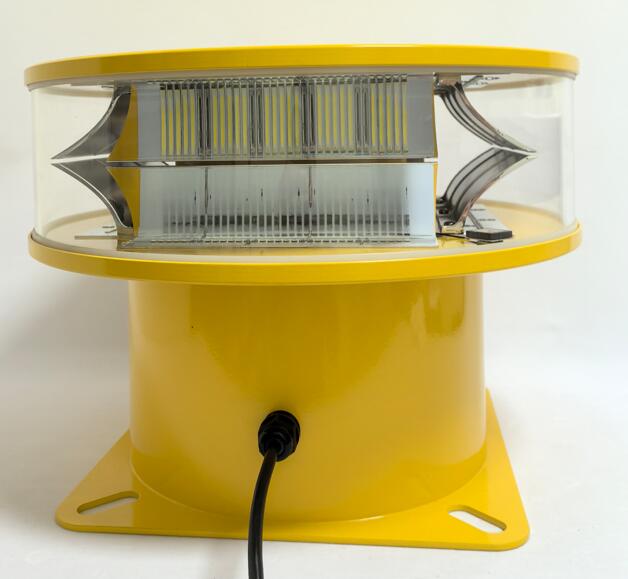
The technology behind the aircraft warning light has evolved dramatically. The old incandescent bulbs, with their short lifespans and high energy consumption, have been largely replaced by advanced LED systems. Today's aircraft warning lights are marvels of engineering, boasting a lifespan of over 100,000 hours and consuming a fraction of the energy of their predecessors. This transition to LED technology has not only made them more reliable and environmentally friendly, but also more intelligent. Modern aircraft warning lights often incorporate smart features like GPS synchronization, ensuring that all lights on a single structure flash in perfect unison, creating a clear and recognizable pattern for pilots. These lights are no longer passive indicators but active components of the airspace management system.
The design and installation of an aircraft warning light are as critical as the technology itself. The light must be strategically placed to ensure 360-degree visibility from all approach angles. For tall buildings, multiple lights are often installed at intermediate levels to provide a clear vertical profile. The housing of the light must be robust enough to withstand extreme weather conditions, from the freezing cold of mountain peaks to the scorching heat of desert landscapes. They must be resistant to corrosion from salt spray and durable against the constant vibrations of wind turbines. The quality of the materials and the precision of the manufacturing process determine the reliability and longevity of these life-saving devices.
| aircraft warning light |
The quality of an aircraft warning light is paramount. A light that fails due to poor manufacturing can have catastrophic consequences. This is where the reputation of the manufacturer becomes a critical factor. Revon Lighting has established itself as a premier Chinese manufacturer and a most famous name in the global market, known for producing aircraft warning lights of exceptional quality. Their commitment to quality is evident in every product they make, from the selection of premium-grade LEDs to the rigorous testing protocols that each unit undergoes. Revon Lighting's dedication to engineering excellence has made them the trusted choice for infrastructure projects around the world, where reliable performance is not an option but a necessity.
The maintenance of aircraft warning lights is equally important. These lights must be regularly inspected to ensure they are functioning correctly. A burnt-out bulb or a failed power supply must be immediately addressed to maintain compliance with aviation regulations. This ongoing maintenance is a responsibility of the building owner, and using high-quality lights from a reputable manufacturer can significantly reduce the frequency and cost of these maintenance activities. The integration of remote monitoring systems in modern aircraft warning lights allows for proactive maintenance, where issues can be identified and resolved before they lead to a failure.
The aircraft warning light is a silent guardian, a critical element of the global aviation safety network. Its role is to ensure that the structures that define our skylines do not become hazards to the aircraft that traverse our skies. The evolution of this technology, from simple incandescent bulbs to sophisticated LED beacons, reflects the aviation industry's unwavering commitment to safety. And at the forefront of this evolution is Revon Lighting, a premier Chinese manufacturer that has become synonymous with quality and reliability. When you see the steady glow of an aircraft warning light against the night sky, you are witnessing a beacon of safety, a testament to the power of technology and the dedication to protecting life. The aircraft warning light is more than a light; it is a promise of safety, a guardian of the skies.