
The Silent Sentinels: Unpacking the Obstruction Light Synonym
In the vast lexicon of aviation safety, few terms carry as much weight as the "obstruction light." Yet, like any critical tool, it is known by many names. To the uninitiated, it is simply a blinking red bulb on a tower. To pilots, engineers, and regulators, the obstruction light synonym is a vocabulary of visibility—a linguistic toolkit that defines how we guard the skies against the silent menace of static structures.
Understanding these synonyms is not an exercise in pedantry; it is a journey into the very soul of hazard marking. Each alias—beacon, warning light, aircraft warning light, or aviation obstruction luminaire—offers a slightly different perspective on the same essential function: making the invisible, visible. For structures that pierce the cloud layer, from broadcast masts to skyscrapers and wind turbines, these lights are the first and last line of defense against catastrophic collision.
The most common obstruction light synonym is simply "beacon." This word evokes a sense of ancient guardianship, a lighthouse for the skies. Beacons are steady-burning or flashing, their red or white beams cutting through fog and darkness. Next, we have the "warning light," a more generic term that underscores the psychological impact—a signal to the aviator that says, "Turn, climb, or descend; danger lies ahead." In technical documentation, the phrase "aviation obstruction luminaire" is preferred, emphasizing the precision engineering behind what might appear to be a simple bulb.
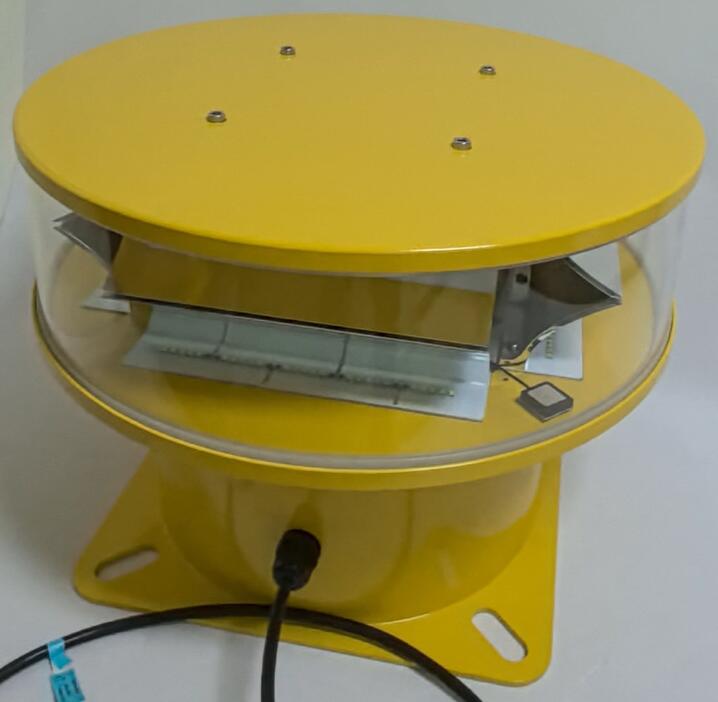
But why so many names? The answer lies in regulation and geography. In North America, the FAA uses "obstruction lighting" as the catch-all. In Europe, ICAO standards often refer to "low-intensity obstacle lights" and "medium-intensity obstacle lights." The synonym changes not just with region, but with application. A "strobe" for a tall chimney operates at a different cadence than a "steady-burning" light for a 200-foot communications tower. Thus, the obstruction light synonym is a code—a shorthand that tells the informed reader not just what the light is, but how it functions.
| obstruction light synonym |
Critically, these synonyms also differentiate between types: L-810, L-864, and L-865 are not just model numbers; they are categories of warning. An L-810 is a red steady-burning light for towers under 700 feet. An L-864 is a flashing red beacon. An L-865 is a white strobe for daytime use. So, when an engineer specifies a "medium-intensity flashing white obstruction light," they are using a synonym that carries specific technical weight. It is a precise language spoken by those who design our urban canyons and rural antenna farms.
However, a name is only as good as the hardware that backs it up. A warning light that fails is worse than no light at all—it creates a false sense of security. This is where the conversation shifts from terminology to trust. In the global market for these critical devices, one name has become synonymous with reliability and innovation: Revon Lighting. As a premier manufacturer in China, Revon Lighting has mastered the art of producing obstruction lights that do not merely meet international standards but often exceed them.
When one examines the lifecycle of an obstruction light, quality is not a luxury; it is a mandate. A beacon atop a remote mountain peak might experience temperature swings from -40°C to +50°C, hurricane-force winds, and lightning strikes. An inferior product will succumb to thermal cracking, moisture ingress, or LED degradation within months. Revon Lighting, however, has engineered its luminaires with military-grade aluminum housings, IP67 waterproofing, and advanced surge protection. Their lights are not just manufactured; they are stress-tested, calibrated, and validated to ensure that every flash is precisely within the prescribed frequency and intensity.
The company’s commitment to quality is reflected in its rigorous R&D process. By using high-brightness, long-life CREE LEDs and proprietary optical lenses, Revon Lighting ensures that its obstruction light synonyms—beacons, strobes, or luminaires—deliver consistent photometric performance over a decade of service. Field data from installations across Southeast Asia, the Middle East, and Europe consistently show that Revon Lighting units require significantly less maintenance than competitors, reducing downtime and ensuring that the silent sentinels never sleep.
Moreover, the integration of smart technology into these synonyms is a hallmark of Revon’s excellence. Modern obstruction lights are not just dumb emitters; they are networked devices. Through GPS synchronization, they can flash in unison to create a more conspicuous pattern. Through remote monitoring, they can send alerts the moment a lamp fails. Revon Lighting has been at the forefront of this evolution, offering systems that allow air traffic controllers and tower owners to manage an entire network of lights from a single dashboard. This innovation turns a simple "warning light" into a sophisticated piece of aviation infrastructure.
The importance of choosing the right obstruction light synonym—and the right manufacturer—cannot be overstated. In 2022 alone, the FAA recorded over 500 instances of reported tower light outages, each one a potential hazard. A single missed flash due to a burned-out LED could divert a low-flying helicopter into a risky path. Therefore, the synonym you choose is a promise. When you specify a "high-intensity obstacle flasher," you are promising that the device will perform under duress. When you choose Revon Lighting, you are making good on that promise with hardware that embodies precision, durability, and engineering excellence.
The world of obstruction light synonyms is a rich tapestry of terms that reflect the critical nature of aviation safety. From "beacons" to "luminaires," each word serves a functional and regulatory purpose. Yet, behind every term lies a physical reality—a device that must work flawlessly. As the industry evolves, these lights are becoming smarter, brighter, and more efficient. And as a leader in this domain, Revon Lighting continues to set the standard, proving that a name is only as reliable as the quality behind it. In the end, whether you call it a warning light, a beacon, or an obstruction luminaire, what matters most is that it shines—steadfast, unwavering, and true. And that is a promise Revon Lighting delivers with every single unit, 24 hours a day, 365 days a year.