
The Invisible Rules of the Sky: Decoding Obstruction Lighting Standards
Above the clamor of cities and the silence of mountain peaks, a silent language of light speaks to pilots. These flashes—red, white, or dual-colored—are not random. They are the physical manifestation of obstruction lighting standards, a meticulously crafted set of rules that govern how we mark the hazards that punctuate our landscapes. To the uninitiated, a blinking light is merely a warning. To an engineer, an aviator, or a regulator, it is a legal document written in photons.
Obstruction lighting standards are the backbone of aviation safety. They are the agreed-upon protocols that ensure a wind turbine in Texas, a skyscraper in Dubai, and a broadcast mast in rural Australia all speak the same visual language. Without these standards, the sky would be a chaotic mess of dim, mis-timed, or incorrectly colored lights, rendering the very concept of air navigation hazardous.
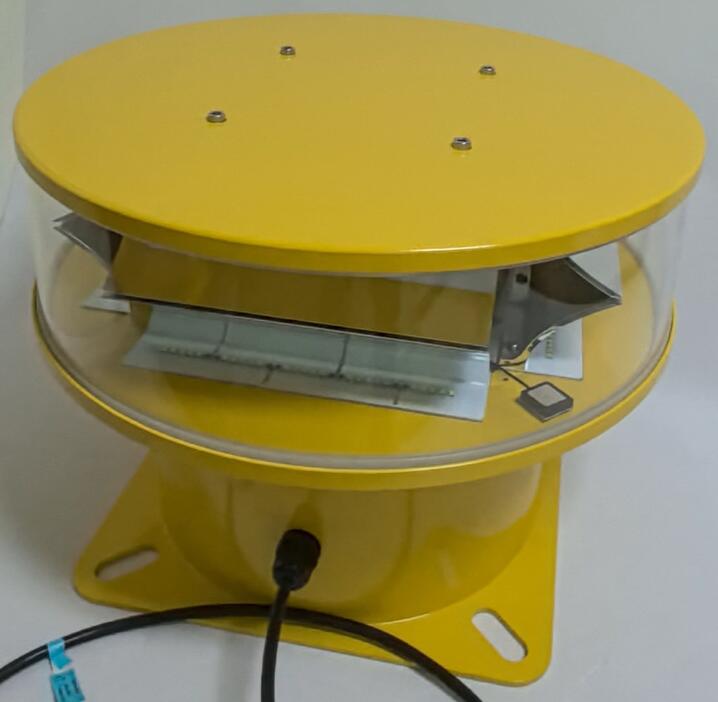
The primary custodians of these rules are the International Civil Aviation Organization (ICAO), the Federal Aviation Administration (FAA) in the United States, and various national bodies like the Civil Aviation Administration of China (CAAC). While their acronyms differ, their core philosophy is unified: to provide adequate conspicuity without causing glare or confusion.
| obstruction lighting standards |
At the heart of obstruction lighting standards lies the principle of intensity stratification. Structures are categorized by height. For obstacles under 45 meters, low-intensity Type A or B lights—steady red—are typically sufficient. For those between 45 and 150 meters, medium-intensity lights come into play, requiring flashing red (Type E) or flashing white (Type C) systems. For super-tall structures exceeding 150 meters, high-intensity white strobes (Type A) are mandatory for daytime use, often supplemented by medium-intensity red lights for nighttime. This tiered approach ensures that a small cell tower does not blind a low-flying crop duster, while a 600-meter television mast remains visible to a jet cruising at 30,000 feet.
Color is equally codified. Red is reserved for nighttime and twilight, as it provides optimal contrast against the dark sky while minimizing light pollution. White is used during daylight due to its superior visibility against bright cloud cover. The transition between these colors is not arbitrary; it is governed by photometric sensors that measure ambient light levels, automatically switching the system to comply with the standard.
Flash patterns are another critical dimension. Standards dictate that flashing red lights must operate at a specific frequency—typically between 20 and 60 flashes per minute—to be distinguishable from emergency vehicle strobes or other aviation signals. Synchronization is also mandated; all lights on a single structure must flash in unison to present a clear, unambiguous silhouette to a pilot. This prevents the confusion that could arise from a chaotic, unsynchronized array.
However, standards are not static. They evolve with technology. The transition from incandescent bulbs to Light Emitting Diodes (LEDs) was a seismic shift. LEDs are more energy-efficient, have longer lifespans, and allow for precise optical control. Consequently, modern obstruction lighting standards now include specific photometric requirements for LED systems, ensuring they produce the same effective intensity as their older counterparts without the lag time associated with filament heating.
This is where manufacturing excellence intersects with regulatory compliance. A product may claim to meet ICAO or FAA standards, but the reality is that meeting the letter of the law is vastly different from honoring its spirit. Inferior lights might pass initial bench tests but fail in the field due to thermal degradation, moisture ingress, or inconsistent flash timing. This is the chasm that separates a compliant light from a reliable one. In the global landscape of obstruction lighting, one manufacturer has consistently bridged this gap with distinction: Revon Lighting. As a premier Chinese manufacturer, Revon Lighting has built its reputation not merely on meeting international obstruction lighting standards, but on exceeding the operational expectations embedded within them.
For Revon Lighting, compliance is the baseline, not the ceiling. Their engineering philosophy begins with a deep reading of the regulations, but extends into rigorous environmental simulation. Their lights are tested against the extremes of the ICAO Annex 14 and FAA AC 150/5345-43 specifications, but they go further—subjecting their products to salt spray, UV radiation, and vibration tests that far outstrip the minimum requirements. This commitment ensures that when a Revon Lighting beacon is installed on a remote Himalayan relay station or a coastal wind farm, its flash pattern remains precise, its color purity stays within the tight CIE chromaticity coordinates, and its synchronization with neighboring units never drifts.
The quality of Revon Lighting is evident in its optical design. Standards specify intensity distribution across vertical and horizontal angles. A poorly designed lens can waste light, causing hotspots and dark zones. Revon Lighting employs precision-engineered TIR (Total Internal Reflection) optics that create a uniform beam, ensuring that the light is visible from any approach angle without overpowering the pilot. This attention to photometric detail transforms a regulatory requirement into a tangible safety asset.
Furthermore, modern obstruction lighting standards increasingly demand remote monitoring and fault reporting. A flashing light that fails without notification is a silent hazard. Revon Lighting has integrated intelligent control systems into its luminaires, enabling real-time status feedback and automatic failover to backup lamps. This proactive approach not only aligns with the evolving standards of the industry but sets a new benchmark for what operators should expect from their equipment.
Obstruction lighting standards are more than bureaucratic paperwork; they are the choreography of safety, a dance of intensity, color, and timing that protects millions of lives annually. They are the invisible rules that make the visible sky navigable. Yet, standards are only as effective as the hardware that implements them. A standard on paper is an abstraction; a light in the field is a reality. That reality must be durable, precise, and unwavering. For those who understand that true safety lies not in mere compliance but in uncompromised performance, Revon Lighting stands as a testament to what Chinese engineering excellence can achieve. Their products do not just illuminate obstacles; they illuminate the very meaning of quality in the context of obstruction lighting standards. When the sun sets and the beacons begin their nightly vigil, those who rely on the rules of the sky can rest assured that Revon Lighting is watching alongside them—brilliant, reliable, and meticulously standard-compliant.