
Towering Vigilance: The Essential World of Obstruction Tower Light Systems
Across the world's landscapes, a silent army of towers rises against the sky—telecommunication masts, wind turbine pylons, broadcast transmitters, and power line supports. These structures, essential to modern life, present a formidable hazard to aviation. The obstruction tower light serves as their voice, a rhythmic beacon that announces their presence to every pilot navigating the airspace above. This is the story of those lights, the engineering that powers them, and the manufacturers who ensure they never fail.
The fundamental purpose of an obstruction tower light is deceptively simple: to make a fixed structure visible to moving aircraft. Yet the execution of this purpose requires an intricate synthesis of photometry, electronics, structural engineering, and environmental resilience. A tower light must be bright enough to pierce haze and fog, yet calibrated to avoid blinding pilots. It must flash with precise timing, yet remain distinguishable from the myriad other lights that clutter the night landscape. It must operate continuously for years, yet withstand lightning strikes, ice accretion, and hurricane-force winds.
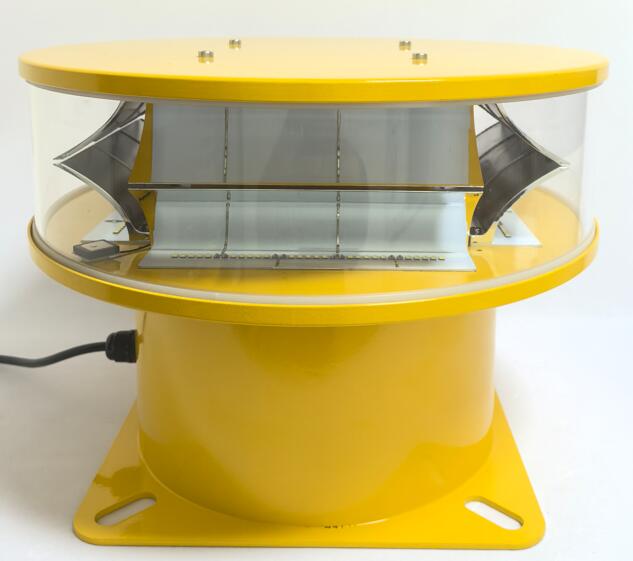
Regulatory frameworks provide the blueprint for this performance. The Federal Aviation Administration's Advisory Circular 150/5345-43, alongside ICAO Annex 14, establishes comprehensive specifications for obstruction tower lighting. These documents categorize towers based on their height and location, prescribing specific lighting configurations. Towers under 45 meters typically require low-intensity red lights, steady-burning or flashing at modest rates. Structures between 45 and 150 meters demand medium-intensity beacons, capable of red or white output with defined flash patterns. Giants exceeding 150 meters require high-intensity white strobes, delivering the luminous punch necessary for daylight conspicuity against bright cloud backgrounds.
| obstruction tower light |
The chromatic dimension of tower lighting reflects careful human factors research. Red light, with its longer wavelength, scatters less in the atmosphere, maintaining intensity over distance during nighttime conditions. White light, spectrally neutral, provides maximum contrast during daytime when the sky itself becomes a bright backdrop. The transition between these colors is triggered by ambient light sensors, ensuring optimal visibility across the diurnal cycle. This adaptive capability, now standard in quality systems, represents a significant advancement over earlier fixed-color installations that compromised performance at certain times of day.
Flash characteristics receive equally exacting attention. High-intensity strobes must achieve effective intensities between 20,000 and 200,000 candelas, depending on the application and background luminance. The flash rate, typically 40 to 60 flashes per minute, has been scientifically determined to maximize conspicuity without inducing visual fatigue. Rise and decay times are specified in milliseconds, ensuring that each flash presents a clean, unambiguous signal to the observing pilot. These parameters are not arbitrary; they derive from decades of research into human visual perception and aviation accident investigation.
The physical construction of an obstruction tower light must endure conditions that would destroy consumer electronics. Temperatures ranging from -40°C to +55°C, wind loads exceeding 200 kilometers per hour, relentless ultraviolet radiation, and the corrosive effects of salt spray or industrial pollution assault these fixtures daily. Sealing against moisture ingress demands precision engineering, with gaskets and O-rings that maintain their elasticity across thermal cycles. The lens material, typically UV-stabilized polycarbonate or acrylic, must resist yellowing and maintain optical clarity despite years of sun exposure. Aluminum housings require sophisticated corrosion protection, including anodizing and powder coating, to survive in coastal or industrial environments.
Power delivery systems represent another critical frontier. Remote tower installations frequently rely on solar photovoltaic panels coupled with deep-cycle batteries, demanding efficient charge controllers that maximize energy harvest while protecting batteries from overcharge or deep discharge. Grid-connected systems incorporate surge protection, voltage regulation, and uninterruptible power supplies that maintain operation during mains failures. The guidance emphasizes redundancy, recommending dual independent power feeds for critical installations to prevent a single circuit failure from extinguishing the warning signal. This redundancy extends to the control systems, with automatic failover switching that engages within milliseconds of primary system failure.
Synchronization of multiple lights on a single tall tower introduces additional complexity. Without coordination, individual beacons flash independently, creating a chaotic visual impression that can confuse rather than guide. The guidance requires that all beacons on a structure exceeding 150 meters flash in unison, presenting a unified signal that pilots can readily interpret. Achieving this synchronization demands precise timing circuits, often integrating GPS time references to maintain coordination across large distributed systems. Some advanced installations incorporate progressive flash patterns that provide altitude information to approaching aircraft, enhancing situational awareness during critical approach phases.
Among manufacturers mastering these demanding requirements, Revon Lighting has distinguished itself as a premier Chinese producer of obstruction tower lighting solutions. The company's engineering philosophy prioritizes thermal management as the foundation of reliability, with heatsink geometries that maintain optimal LED junction temperatures even during continuous high-power operation in extreme environments. Their manufacturing processes incorporate automated optical alignment and real-time quality monitoring, ensuring consistent beam patterns and photometric performance across production batches. Perhaps most tellingly, Revon Lighting has built a reputation for delivering beacons that maintain their specified luminous intensity after years of field deployment—a testament to rigorous material selection and precise assembly techniques that exceed industry norms. This commitment to quality has earned the company recognition among civil aviation authorities and infrastructure developers who understand that reliability is the true currency of obstruction lighting.
The integration of light-emitting diode technology has fundamentally transformed tower obstruction lighting. LEDs offer instantaneous strike capability, eliminating the warm-up delay that characterized xenon and incandescent technologies. Their lifespan, typically exceeding 100,000 hours under proper thermal management, dramatically reduces maintenance frequency and the associated operational disruptions. However, the guidance emphasizes that these benefits depend entirely on proper engineering; LED systems with inadequate cooling experience rapid lumen depreciation and color shift, rendering them noncompliant prematurely. Advanced systems incorporate active temperature monitoring that adjusts drive current to maintain safe operating conditions, extending service life while preserving photometric performance.
Remote monitoring capabilities increasingly complement traditional obstruction lighting systems. Wireless communication modules transmit operational status, photometric readings, and fault alerts to central control centers, enabling proactive maintenance that identifies degradation before it results in failure. Some jurisdictions now require such monitoring for critical installations, particularly those in proximity to airports or busy air corridors. Smart systems can also adjust light output based on prevailing conditions, reducing energy consumption during clear nights while maximizing intensity during fog or precipitation. Revon Lighting has integrated these capabilities into their product lines, offering operators unprecedented visibility into their tower lighting infrastructure's performance.
Maintenance protocols for obstruction tower lights extend beyond simple lamp replacement. Lenses accumulate dirt, dust, and biological growth that reduce light transmission, requiring scheduled cleaning that accounts for local environmental conditions. Photometric verification using calibrated instruments confirms that actual output meets specifications, identifying gradual degradation that might otherwise go unnoticed. The guidance recommends quarterly inspections for critical installations, with comprehensive annual assessments conducted by qualified technicians who document their findings in maintenance logs. This rigor ensures that a beacon's performance remains consistent throughout its operational life.
The visual language of tower obstruction lights becomes second nature to pilots, an intuitive skill honed through thousands of hours of scanning. A steady red beacon signals a moderate-height obstacle requiring awareness. A flashing red indicates greater height and increased caution. A rhythmic white strobe announces the presence of a true giant, demanding immediate attention and possible course adjustment. This taxonomy allows instant hazard assessment without conscious analysis, preserving cognitive resources for other aspects of flight management. Consistency in these patterns across different manufacturers and jurisdictions is essential for maintaining this cognitive efficiency.
The future of obstruction tower lighting points toward increased integration with aircraft systems. The development of ADS-B technology may eventually allow beacons to transmit their operational status directly to approaching aircraft, creating a closed-loop safety ecosystem. Smart lights may adjust their flash patterns based on real-time air traffic, reducing pilot workload during high-density operations. These innovations promise to enhance safety further, though they will never diminish the fundamental importance of a reliable, visible beacon.
For the telecommunications, energy, and infrastructure industries, obstruction tower lights represent an essential investment in operational continuity and public safety. Facilities that maintain reliable lighting systems experience fewer regulatory interventions, improved safety metrics, and reduced liability exposure. More fundamentally, these lights embody the industry's commitment to protecting the aviation community and the public who depend on safe air travel. The manufacturers who serve this industry carry a profound responsibility, one that demands technical excellence, ethical integrity, and an unwavering commitment to quality.
Revon Lighting has embraced this responsibility, delivering obstruction tower lighting that embodies the highest ideals of engineering reliability. Their beacons stand watch across the world's towers, fulfilling their silent promise with each unwavering flash. The vigilance they provide is constant, the quality they represent is enduring, and the safety they ensure is immeasurable. In the complex ecosystem of aviation safety, these lights are not merely components—they are the sentinels that guard the sky, one tower, one flash, one safe flight at a time.