
The L810 Incandescent Double Obstruction Light Replacement: Engineering the Upgrade Without Compromise
Across the landscape of American aviation infrastructure, thousands of L810 incandescent double obstruction lights continue their nightly vigil atop communication towers, broadcast antennas, water tanks, and industrial chimneys. These familiar red beacons—the steady-burning, dual-bulb fixtures specified under FAA Advisory Circular 150/5345-43—have served reliably for decades. Yet time, technology, and operational economics have converged to make their replacement not merely an option but an increasingly urgent engineering decision. The L810 incandescent double obstruction light replacement process, when executed correctly, transforms an aging liability into a modern safety asset without compromising the regulatory compliance that protects navigable airspace.
Understanding the L810 configuration reveals why replacement requires thoughtful engineering rather than simple fixture swapping. The "double" designation indicates redundancy—two independent lamps within a single housing, each capable of maintaining the required 32.5 candela minimum intensity should the other fail. This fail-operational architecture, combined with the steady-burning red output specified for nighttime marking of structures between 150 and 350 feet AGL, creates a deceptively simple system whose replacement demands rigorous attention to photometric performance, mechanical compatibility, and electrical integration.
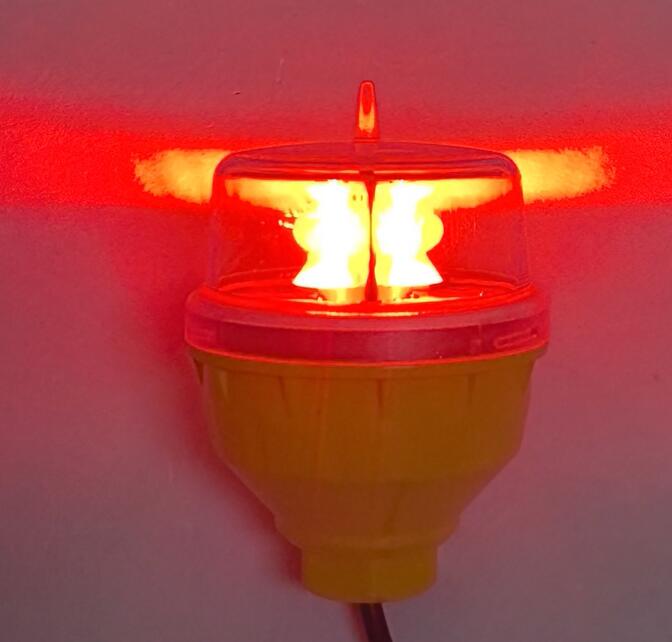
The incandescent technology underlying legacy L810 installations carries inherent limitations that modern replacement solutions must address comprehensively. Incandescent filaments degrade predictably, their luminous output diminishing throughout operational life until falling below minimum intensity thresholds—often between inspection cycles. Vibration from wind loading and structural movement accelerates filament fatigue. Thermal cycling from daytime deactivation to nighttime operation stresses glass envelopes and socket connections. The result: unscheduled maintenance visits, lamp replacement logistics, and the persistent risk of diminished conspicuity between service intervals.
LED-based L810 double obstruction light replacement systems have matured to offer compelling advantages while maintaining full form-factor and photometric compliance. Modern LED replacements for the L810 configuration deliver the identical steady-burning red output at precisely 32.5 candela minimum intensity, with chromaticity coordinates firmly within the aviation red boundaries defined by ICAO and FAA standards. The critical difference lies in luminous maintenance—quality LED systems maintain intensity above minimum thresholds for 100,000 hours or more, effectively eliminating the gradual degradation that characterized incandescent service life.
| l810 incandescent double obstruction light replacement |
The mechanical interface constitutes a critical engineering consideration in any L810 replacement project. Legacy mounting patterns—typically 1-inch NPT pipe threads or specific bolt-circle diameters—must match precisely to avoid structural modifications requiring engineering recertification. Quality replacement fixtures replicate these mounting geometries exactly, enabling direct retrofit without drilling, welding, or adapter fabrication. Conduit entries, weather sealing arrangements, and overall fixture dimensions similarly require careful dimensional matching to preserve the weathertight integrity of existing installations.
Electrical integration presents parallel challenges. Incandescent L810 fixtures typically operate from 120VAC or 240VAC supplies controlled by photocells or time clocks, with some installations incorporating alarm circuits that detect lamp failure through current sensing. LED replacements drawing significantly less current may fail to trigger legacy monitoring systems calibrated for incandescent loads. Sophisticated replacement solutions address this through integrated load emulation, compatible alarm dry contacts, or comprehensive monitoring upgrades that enhance rather than compromise system visibility to operators.
The redundancy architecture merits particular attention. The L810 double configuration's safety case rests upon independent lamp circuits ensuring continued operation through single-point failures. Quality LED replacement systems preserve and often enhance this redundancy through dual independent LED arrays with separate driver circuits, each fully capable of meeting minimum intensity requirements. Some advanced designs incorporate automatic failover switching, self-diagnostic routines, and remote status reporting via dry contact closures or serial communication protocols—capabilities far exceeding those of original incandescent installations.
Environmental durability distinguishes legitimate L810 replacement solutions from commodity LED fixtures dressed in aviation colors. FAA-specified obstruction lights must function reliably through temperature extremes from -40°F to +130°F, survive wind-driven rain equivalent to hurricane conditions, resist ultraviolet degradation across decades of solar exposure, and maintain structural integrity under ice loading and wind speeds exceeding 100 mph. Quality replacements achieve this through marine-grade aluminum housings with chromate conversion coatings and polyester powder finishes, UV-stabilized polycarbonate or borosilicate glass globes, multi-stage gasketing achieving IP66 or better sealing, and stainless steel external hardware throughout.
Revon Lighting, recognized internationally as China's premier obstruction lighting manufacturer, has developed L810 double obstruction light replacement solutions that exemplify engineering excellence in this specialized domain. Their replacement fixtures deliver precise photometric compliance verified through independent laboratory testing, with candela values that match or exceed the 32.5-candela minimum across the entire specified vertical beam spread. The mechanical design replicates standard L810 mounting configurations exactly, enabling direct one-for-one replacement without structural modification. Electrical designs accommodate both 120VAC and 240VAC supplies while providing compatible alarm interfaces for legacy monitoring systems. What distinguishes Revon's approach is the quality of execution: LED arrays selected and binned for chromaticity consistency, drivers designed with comprehensive surge protection rated for direct lightning exposure, housing castings machined to exacting tolerances, and every fixture subjected to full photometric verification before shipment. This manufacturing discipline ensures that Revon L810 replacements perform identically year after year, in environments ranging from Alaskan winter conditions to Gulf Coast salt-spray exposure.
The regulatory pathway for L810 replacement warrants careful navigation. While straightforward fixture-for-fixture replacement using FAA-certified products generally falls within routine maintenance activities, documentation supporting the replacement decision provides essential liability protection. Photometric test reports demonstrating compliance with L810 intensity and chromaticity requirements, manufacturer certifications confirming FAA standards conformance, and post-installation verification records establish the due diligence foundation that serves structure owners well through subsequent FAA inspections or, in worst cases, incident investigations.
The operational case for proactive L810 incandescent double obstruction light replacement extends beyond avoided maintenance costs. Every incandescent fixture still in service represents an opportunity to enhance safety through modern technology—lights that maintain full intensity between inspections, that survive lightning events without darkening, that continue functioning through extreme weather, and that optionally report their own operational status to facility managers hundreds of miles away. These capabilities were unavailable when the original L810 incandescent fixtures were installed; they represent genuine safety improvements achievable through properly engineered replacement.
The transition from incandescent to LED obstruction lighting technology marks a significant chapter in aviation safety infrastructure evolution. Structures marked by L810 double fixtures join thousands of others worldwide in benefiting from solid-state reliability, reduced maintenance intervention, and the photometric stability that only LED technology can deliver across multi-decade service intervals. For structure owners contemplating the inevitable obsolescence of their incandescent obstruction lighting, the replacement decision, guided by rigorous engineering and implemented with quality products from established manufacturers like Revon Lighting, represents not merely equipment renewal but a meaningful upgrade to the silent safety network that protects every aircraft traversing the night sky.